The Supreme Court ruled Monday that white firefighters in New Haven, Conn., were unfairly denied promotions because of their race, reversing a decision that high court nominee Sonia Sotomayor endorsed as an appeals court judge.
The Decision was 5-4, with the usual alignment. Justice Ginsberg's dissent is especially powerful, smacking the Right-Wingers with her comment that it is "understandable" why the White firefighters would appeal to "this Court".
The "Supremacist" Wing of The Court has deftly severed the principles of "intentional discrimination" from "disparate impact" meaning that it is now not enough to demonstrate the second, one also has to prove the first. Now a nod and a wink will suffice among a clique and if that clique carefully monitors the overt behavior of their group and take no documentable action, they can exclude others on the basis of race, sex, national origin or religion. The Bush Supreme Court Rules.
Here is my personal take on this case.
I was an emergency forest firefighter (so-called EFF) in my youth. Because I am Native American, I was sometimes placed with the Native Alaskan crews. The best firefighters I ever worked with was a hot shot crew from the Yukon Village of Stevens Village brought in to make fire breaks during the "Big Denver" fire in Manley Hot Springs in 1968. The Stevens crew was tough, smart, well-organized and had excellent leadership. The fire was so named because the leadership came out of Denver. This fire was of historic proportions and BLM brought their best and their brightest to Alaska to manage the command and control. It so happened that there was a group of professional firefighters out of Boise Idaho who rapidly assumed a lead role in fire management on the ground.
After the initial few days, I was transferred to another crew to deal with maintaining fire breaks. This crew was called the "Hippy" crew and was much more laid back and to my liking. Nevertheless, I was in a good position to observe what was going on. The blond, blue-eyed college guys from Denver and the blond, blue-eyed college guys from Boise shared a culture that excluded the Native Alaskans--and the "hippies" for that matter, but less so. The White Guys from Boise and Denver got the best rations, the best equipment, rode around in the chopper, and got radios. The "Indian Crew" got the crappiest details, the worst equipment and C-Rations instead of the fresh-paks of food that was flown in.
Now suppose there was an opening for a "pro-Crew" to travel with the Denver Chiefs. From every practical standpoint, the Stevens Village crew would be the best choice. But the Denver guys and the Boise guys are so tight...and the Indians are so....different. What could they do?
Well, one thing they could do is have a test. The test would be about BLM regulations and the DOI org chart and the physics of fire and the chemistry of fire retardant. It's all relevant.
Guess what? Most Stevens Village EFF went to a lousy village school and barely know the times table. Guess what? The tanned and groovy blue-eyed blonds would ride off to the Denver sunset together.
The point: don't tell me that all those high-fives among the White Fire Fighters wasn't (in part) a celebration of their cultural dominion.
DEMOCRACY NOW!

Click button above to go to DEMOCRACY NOW!
Monday, June 29, 2009


Saturday, June 27, 2009
Tuesday, June 23, 2009
President Cool Plays It Right
President Cool Plays It Right
By Richard Cohen
Tuesday, June 23, 2009
The Washington Post
The foreign policy sins of the United States fall into two categories: commission and omission. The commission ones include the wars in Vietnam and Iraq, and a one-time Latin American policy tailored to the needs of United Fruit Co. The sins of omission are less well-known. They include the failure to redeem the hollow promises to various subjugated peoples -- the Hungarians of 1956, the Shiites of 1991 -- that America would come to their aid. In Iran, the Obama administration is intent on not adding to this list.
The current policy, much criticized by prominent Republicans, vindicated Barack Obama's boast in his Cairo speech that he is a "student of history." The student in him knows that the worst thing the United States could do at the moment is provide the supreme leader and the less supreme leaders with the words to paint the opposition as American stooges -- or, even worse, suggest to the protesters that some sort of help is on its way from Washington.
Some of Obama's critics have faulted him for not doing what Ronald Reagan (belatedly) did following the fraudulent election in the Philippines in 1986. After some dithering, Reagan virtually forced President Ferdinand Marcos into exile. How neat. How not a precedent for Iran.
Marcos was, to exhume a dandy Cold War phrase, an "American lackey." The Philippines itself was a former American colony. We knew the country. Hell, at one time, we virtually owned it.
In contrast, not a lot is known about how Iran is actually governed. If, for instance, the White House asked the State Department to send over someone with on-the-ground experience in contemporary Iran, the car would arrive empty. The last American diplomats left Iran in 1979. The United States has to rely on foreign diplomats and journalists for its information.
But information is not experience. It cannot substitute for the feel of the country -- a sense of what happens next. This sort of knowledge was precisely what the United States did not have about Iraq, and we have learned the hard way that satellites, intercepts and the like are no substitute for human intelligence. The Obama White House is showing commendable respect for what it does not know.
For instance, right now a crucial question is: What is the role of the former president, Ali Akbar Hashemi Rafsanjani? As far as Washington is concerned, this powerful figure has dropped from sight. He presumably is in the opposition to President Mahmoud Ahmadinejad and, like other supposed reformers, had opposed the increasing power and influence of the military. But, as with many of the others, to call this deeply conservative and -- at least in the past -- virulently anti-American figure a "reformer" gives the word a whole new meaning.
Few of these nuances have made much of an impression on certain Republicans. As in the Cold War, they yearn for liberation rhetoric -- strong statements with a Jeffersonian flourish. Sens. John McCainand Lindsey Graham are two of the more notable proponents of this line of criticism, wondering why Obama did not initially condemn the crackdown in much more forceful terms, as did Nicolas Sarkozy of France and Angela Merkel of Germany. "The president of the United States is supposed to lead the free world, not follow it," Graham said.
Good point, usually. But not this time. Neither Germany nor France has America's history in Iran. It was America that staged the 1953 coup that ousted Mohammed Mossadegh and returned the shah to the Peacock Throne. Neither France nor Germany has been the object of Iranian vituperation since the 1979 revolution -- all that Great Satan nonsense -- and neither of these countries felt obliged to respond in kind: the axis of evil formulation of the Bush years. Pow! How brilliant.
Still, if McCain, Graham and others have a valid complaint, it is not with Obama's words but with his music. The President of Cool seems emotionally disconnected from events in Tehran -- not unconcerned but not particularly upset, either. This is a quality that will cost Obama plenty in coming years. He can acknowledge your pain, but he cannot feel it.
Iran, the first foreign policy "crisis," alerts us to what to expect in the future: a tightly controlled message from the White House (Anyone heard from Hillary Clinton lately?), a deliberate consideration of the options and no shoot-from-the-hip remarks. This is how Obama ran his campaign. This is how he'll run his foreign policy. As McCain should know, it works.
By Richard Cohen
Tuesday, June 23, 2009
The Washington Post
The foreign policy sins of the United States fall into two categories: commission and omission. The commission ones include the wars in Vietnam and Iraq, and a one-time Latin American policy tailored to the needs of United Fruit Co. The sins of omission are less well-known. They include the failure to redeem the hollow promises to various subjugated peoples -- the Hungarians of 1956, the Shiites of 1991 -- that America would come to their aid. In Iran, the Obama administration is intent on not adding to this list.
The current policy, much criticized by prominent Republicans, vindicated Barack Obama's boast in his Cairo speech that he is a "student of history." The student in him knows that the worst thing the United States could do at the moment is provide the supreme leader and the less supreme leaders with the words to paint the opposition as American stooges -- or, even worse, suggest to the protesters that some sort of help is on its way from Washington.
Some of Obama's critics have faulted him for not doing what Ronald Reagan (belatedly) did following the fraudulent election in the Philippines in 1986. After some dithering, Reagan virtually forced President Ferdinand Marcos into exile. How neat. How not a precedent for Iran.
Marcos was, to exhume a dandy Cold War phrase, an "American lackey." The Philippines itself was a former American colony. We knew the country. Hell, at one time, we virtually owned it.
In contrast, not a lot is known about how Iran is actually governed. If, for instance, the White House asked the State Department to send over someone with on-the-ground experience in contemporary Iran, the car would arrive empty. The last American diplomats left Iran in 1979. The United States has to rely on foreign diplomats and journalists for its information.
But information is not experience. It cannot substitute for the feel of the country -- a sense of what happens next. This sort of knowledge was precisely what the United States did not have about Iraq, and we have learned the hard way that satellites, intercepts and the like are no substitute for human intelligence. The Obama White House is showing commendable respect for what it does not know.
For instance, right now a crucial question is: What is the role of the former president, Ali Akbar Hashemi Rafsanjani? As far as Washington is concerned, this powerful figure has dropped from sight. He presumably is in the opposition to President Mahmoud Ahmadinejad and, like other supposed reformers, had opposed the increasing power and influence of the military. But, as with many of the others, to call this deeply conservative and -- at least in the past -- virulently anti-American figure a "reformer" gives the word a whole new meaning.
Few of these nuances have made much of an impression on certain Republicans. As in the Cold War, they yearn for liberation rhetoric -- strong statements with a Jeffersonian flourish. Sens. John McCainand Lindsey Graham are two of the more notable proponents of this line of criticism, wondering why Obama did not initially condemn the crackdown in much more forceful terms, as did Nicolas Sarkozy of France and Angela Merkel of Germany. "The president of the United States is supposed to lead the free world, not follow it," Graham said.
Good point, usually. But not this time. Neither Germany nor France has America's history in Iran. It was America that staged the 1953 coup that ousted Mohammed Mossadegh and returned the shah to the Peacock Throne. Neither France nor Germany has been the object of Iranian vituperation since the 1979 revolution -- all that Great Satan nonsense -- and neither of these countries felt obliged to respond in kind: the axis of evil formulation of the Bush years. Pow! How brilliant.
Still, if McCain, Graham and others have a valid complaint, it is not with Obama's words but with his music. The President of Cool seems emotionally disconnected from events in Tehran -- not unconcerned but not particularly upset, either. This is a quality that will cost Obama plenty in coming years. He can acknowledge your pain, but he cannot feel it.
Iran, the first foreign policy "crisis," alerts us to what to expect in the future: a tightly controlled message from the White House (Anyone heard from Hillary Clinton lately?), a deliberate consideration of the options and no shoot-from-the-hip remarks. This is how Obama ran his campaign. This is how he'll run his foreign policy. As McCain should know, it works.
Monday, June 22, 2009
Right-Thinking Realism

>Note. A former Bush State Department Official says that President Obama is striking the right tone on Iran and would be advised to ignore critics on the Right.
Right-Thinking Realism
By Paul J. Saunders
Monday, June 22, 2009
The Washington Post
Attacks are mounting against President Obama for failing to offer sufficient support to backers of presidential candidate Mir Hossein Mousavi in Iran, with claims that Obama is "siding with the regime" against the Iranian people. This approach to the crisis is derided as "realist" -- typically with quotation marks -- as well as cold-blooded and insufficiently committed to American values. But the president has struck the right tone in his public statements, calling on Iran's government to stop "all violent and unjust actions" and making clear that Washington and the world are watching. And he is right to avoid becoming more deeply involved in Iran's post-election political crisis, both practically and morally.
Many politicians and commentators seem to suffer from the illusion that the United States can have a decisive influence on Iran's political evolution. They appear to believe this despite the fact that engineering Iraqi democracy -- which a number of them also urged -- has been far more difficult and costly than was advertised at the outset. Moreover, Iran's political system is no less complex and is probably less well understood in America than Iraq's was before March 2003. How many American experts, officials or members of Congress have been to Iran in the past 30 years? It is Iran's 66 million citizens, not tough rhetoric or token assistance, who will determine how events in the country unfold.
Recognizing this, it is not only unproductive but dangerous for the United States to play too visible a role in Iran's domestic disturbances.
The question goes far beyond how actively supporting what amounts to a potential revolution in Iran could impact efforts at engagement or a "grand bargain." We must also ask ourselves how the Iranian people would react to U.S. involvement in a country where strong nationalist sentiment buttresses the political position of the country's conservatives and Washington is already regularly blamed for supporting a 1953 coup. Can the United States really help?
As British scholar Anatol Lieven has written for the Nixon Center's journal, the National Interest, one of the main reasons that Russia's democratic reform has failed while similar efforts succeeded in Central Europe is that democracy movements in Poland, Hungary, the Czech Republic and elsewhere were fueled by powerful anti-Russian nationalism -- a mobilization strategy that Russian democrats could not effectively employ against their own government.
Iran's reformers face a similar dilemma. The theocratic regime is losing legitimacy in part because of its economic failure. But as religious and economic legitimacy weaken, what else is left? Iranian nationalism could be decisive, and it is reckless to toy with something that we do not adequately understand.
Another reason for the Obama administration to let Iranians work out their politics on their own is that it is far from clear that there is a substantial difference for U.S. interests between the two competitors. While Mr. Mousavi has distanced himself from Mahmoud Ahmadinejad's offensive rhetoric about the Holocaust, there is little to suggest that his policies would vary markedly from Ahmadinejad's on Iran's nuclear program or its ties to Hamas and Hezbollah. Ironically, as my Nixon Center colleague Geoffrey Kemp has suggested, a Mousavi victory could well lead to weakening international pressure on Iran on these issues as a result of European reluctance to undermine someone who, many would hope, could emerge as a moderate and a reformer. (This is not a call to "side" with Ahmadinejad.)
The final argument against a stronger public American position on Iran's protests as they now stand is a powerful moral one. The United States encouraged Hungarians in an uprising against their communist leaders in 1956, only to watch as the brave individuals who chose to stand against their regime were killed mercilessly by their own government because they lacked sufficient internal or external support to succeed. If the American people are not prepared to offer real help to the protesters in Tehran's streets -- up to and including military force to ensure that they win -- it is profoundly immoral to urge Iranians to action from the sidelines. Some of the American commentators and politicians now critical of the president gave the same rhetorical "support" to Georgia's President Mikheil Saakashvili last year, emboldening Saakashvili and contributing to a war that was disastrous for Georgians.
No one advocating support for Mousavi seems prepared to accept responsibility for the outcome. But without doing so, fighting Ahmadinejad to the last Mousavi voter would be far more cold-blooded than anything the Obama administration has done -- especially knowing what we know about the Iranian regime.
Mousavi's backers will prevail in Iran if they have sufficient public and political support, including inside the country's military and security services. If they don't, we can hope that they survive and draw useful lessons to try again another day. U.S. efforts to force the issue are more likely to set back Iran's political evolution than to advance it, and President Obama has done the right thing with his measured comments. If the crisis escalates, it may be necessary to do more, something the administration itself has said. Otherwise, those who truly want to see political reform in Iran would do well to stay out of the way.
---
Paul J. Saunders is executive director of the Nixon Center and served in the State Department during the second Bush administration.
Friday, June 19, 2009
Can You Say Irony?
This post from a Facebook Friend:
"Can You Say Irony...I knew You Could:
Andree McLoed has posted this on the ADN in regards to the story about Rep Bob Lynn wanting ethics complaints to be kept secret…….
Alaska Oil and Gas Conservation Commission Chairwoman Sarah Palin said Friday she is resigning amid frustration that she is being forced to keep silent about ethics allegations against Republican Party of Alaska chairman Randy Ruedrich.
“I’m forced to withhold information from Alaskans, and that goes against what I believe in as a public servant,” Palin said in a Friday interview."
http://www.adn.com/sarah-palin/background/story/513761.html
"Can You Say Irony...I knew You Could:
Andree McLoed has posted this on the ADN in regards to the story about Rep Bob Lynn wanting ethics complaints to be kept secret…….
Alaska Oil and Gas Conservation Commission Chairwoman Sarah Palin said Friday she is resigning amid frustration that she is being forced to keep silent about ethics allegations against Republican Party of Alaska chairman Randy Ruedrich.
“I’m forced to withhold information from Alaskans, and that goes against what I believe in as a public servant,” Palin said in a Friday interview."
http://www.adn.com/sarah-palin/background/story/513761.html
Thursday, June 11, 2009
This Stuff Drives The Republicans Nuts!
President Obama demonstrates a quality that drives the Right crazy--his ability to be spontaneous and maintain his zen-like cool. If George Bush did something like this, Fox would have been gushing all kibnds of sticky stuff through your cable box. Instead, they sneer at O helping a "kid skip school
Thursday, May 28, 2009
The Irony of Right Wing Attacks on Judge Sotomayor
“To Thine Own Self Be True”, the advice of the Oracle of Delphi; true then, absolutely true now. Sotomayor is being damned by Right for speaking openly about the affects of her background...gender, race AND class. When she discussed the differences her perspectives bring to the bench than a “White Male” (quickly grabbed and echoed by the Right-Wing White Males gassing up the airwaves) she WENT ON to conclude that she had a special responsibility to be aware of those perspectives and balance them in her judicial role. This LAST part of her now famous “White Male” speech is conveniently left out by her critics. In essence Judge Sotomayor was saying “To Mine Own Self, Be True”.
Yet when we look back to the nomination of Sam Alito, we read the same sort of speech...his ethnicity, his culture his parent’s class...all asserted to be a VIRTUE so as to TEMPER and MODERATE his judgment on the bench. Clarence Thomas, the most transparent beneficiary of a racial quota in American History was lauded by the Right for his race and class while the Right asserted that attacks on his record and questions of his character constituted a “High-Tech Lynching”. No race card played there! And who can forget the lachrymose bleating of the Right Wing when Liberals dared to question the competence of Alberto Gonzales; Karl Rove chuckled to Newsweek’s Robert J. Samuelson that his Latino heritage made him “untouchable”.
Shall we ignore the fact that Judge Sotomayor has the most judicial experience of any Supreme Court nominee in a century? The fact that she HAS a record of decision allows the opposition to twist and spin a body of work to mean whatever serves their cause.
Will Sotomayor be “objective” in her rulings? She is brilliant and experienced and I will trust her to be fair. No one comes to the bench as a tabula rasa, unetched and pure. The Republican opponents of William Frankfurter’s nomination by President Roosevelt whispered that Frankfurter’s experiences with anti-Antisemitism in Austria where he was born might make him too “pro-Jewish”, whatever that meant.
Had Rush Limbaugh been alive in the 1930s he would be shrieking that poison for his Republican colleagues, just as he is today.
Yet when we look back to the nomination of Sam Alito, we read the same sort of speech...his ethnicity, his culture his parent’s class...all asserted to be a VIRTUE so as to TEMPER and MODERATE his judgment on the bench. Clarence Thomas, the most transparent beneficiary of a racial quota in American History was lauded by the Right for his race and class while the Right asserted that attacks on his record and questions of his character constituted a “High-Tech Lynching”. No race card played there! And who can forget the lachrymose bleating of the Right Wing when Liberals dared to question the competence of Alberto Gonzales; Karl Rove chuckled to Newsweek’s Robert J. Samuelson that his Latino heritage made him “untouchable”.
Shall we ignore the fact that Judge Sotomayor has the most judicial experience of any Supreme Court nominee in a century? The fact that she HAS a record of decision allows the opposition to twist and spin a body of work to mean whatever serves their cause.
Will Sotomayor be “objective” in her rulings? She is brilliant and experienced and I will trust her to be fair. No one comes to the bench as a tabula rasa, unetched and pure. The Republican opponents of William Frankfurter’s nomination by President Roosevelt whispered that Frankfurter’s experiences with anti-Antisemitism in Austria where he was born might make him too “pro-Jewish”, whatever that meant.
Had Rush Limbaugh been alive in the 1930s he would be shrieking that poison for his Republican colleagues, just as he is today.
Tuesday, May 19, 2009
Friday, May 08, 2009
When Life Is Only Sacred In The Womb: The Folly of Life as a Political Abstraction
Harriet and I attended a dinner for Planned Parenthood at the Hilton this evening. It was an uplifting event in which individuals were honored for their hard work supporting the lives of families and children in our community. Planned Parenthood is one of the most important "pro-life" groups I know. They work with "life" in the lower case "l", the gritty, real and difficult life that constitutes our imperfect human estate.
Outside the Hotel there were about a dozen folks holding up pictures of bloody chicken-like fetuses. As I walked through the protesters I realized that to them life is an abstraction, with a capital "L". The fetus does not really represent life; "Life" is embodied in the fetus. There is an important difference here. After all, If life is sacred, and here I mean the web of life on Earth, the public policy agenda of so-called 'Pro-Life' activists would look FAR different.
But when life is only sacred in the womb, it is possible to tolerate corporate behavior that steals from families, exposes life to environmental risk and causes illness and death through accident or calculation to thousands around the world.
When life is only sacred in the womb, illegitimate wars that cause the deaths of 100s of thousands go unchallenged by "Pro-Lifers".
When life is only sacred in the womb, so-called "Pro-Life" politicians can pander to the Health Insurance Lobby and prevent Universal Health Care from becoming a reality.
The so-called "Pro-Life" side is silent on the imprisonment of 7% of our population in a penal system designed to warehouse bodies rather than care, reform, or redeem human life. They insist on a "law and order" agenda that criminalizes behavior in a bid to legislate morality. They support the prosecution of children as adults, they oppose funding a justice system for the poor, then they support the mandatory sentencing of those who are convicted.
With global warming, the extinction of species, and the explosion of urban and suburban sprawl throughout the globe-- the predicament of ALL life warrants our prayerful attention.
Yet, one of the (many) contradictions of the Sacred Wombsters is this: They believe that the Fate of the World is in God's Hands. I remember Nixon's "Born Again" Interior Secretary Kleppe testifying before Congress. Here is how the Secretary explained his reluctance to enforce environmental regulations (I paraphrase): God is the steward of the earth and this world will end. When the appointed time for the end comes, there will be little that any of us can do. So why bother?
So if environmental public policy designed to protect life is unnecessary because God will destroy this sinful earth anyway, then, when it comes to salvaging fetuses, why bother?
This is the point when the Wombsters start all the happy talk about "The Elect" and the "Rapture" when all the bloody chicken-fetuses take wing and soar to heaven. But unless you are Sarah Palin and believe that humans palled around with dinosaurs 6,000 years ago, it's kind of hard to believe that what began with calamity can possibly end any other way.
When the globe finally tilts as ice mass is redistributed in the form of water and the angle of rotation of the planet shifts just slightly, eliciting a movement of continental plates, the Evangelical will feel the Earth move and he/she shall seek protection from the calamity. The Evangelical will be praying not for everlasting life but simply for life; not for the glory of Heaven, but for survival on this earth.
Life is not abstract at all. Life is just life; isn't that enough?
Outside the Hotel there were about a dozen folks holding up pictures of bloody chicken-like fetuses. As I walked through the protesters I realized that to them life is an abstraction, with a capital "L". The fetus does not really represent life; "Life" is embodied in the fetus. There is an important difference here. After all, If life is sacred, and here I mean the web of life on Earth, the public policy agenda of so-called 'Pro-Life' activists would look FAR different.
But when life is only sacred in the womb, it is possible to tolerate corporate behavior that steals from families, exposes life to environmental risk and causes illness and death through accident or calculation to thousands around the world.
When life is only sacred in the womb, illegitimate wars that cause the deaths of 100s of thousands go unchallenged by "Pro-Lifers".
When life is only sacred in the womb, so-called "Pro-Life" politicians can pander to the Health Insurance Lobby and prevent Universal Health Care from becoming a reality.
The so-called "Pro-Life" side is silent on the imprisonment of 7% of our population in a penal system designed to warehouse bodies rather than care, reform, or redeem human life. They insist on a "law and order" agenda that criminalizes behavior in a bid to legislate morality. They support the prosecution of children as adults, they oppose funding a justice system for the poor, then they support the mandatory sentencing of those who are convicted.
With global warming, the extinction of species, and the explosion of urban and suburban sprawl throughout the globe-- the predicament of ALL life warrants our prayerful attention.
Yet, one of the (many) contradictions of the Sacred Wombsters is this: They believe that the Fate of the World is in God's Hands. I remember Nixon's "Born Again" Interior Secretary Kleppe testifying before Congress. Here is how the Secretary explained his reluctance to enforce environmental regulations (I paraphrase): God is the steward of the earth and this world will end. When the appointed time for the end comes, there will be little that any of us can do. So why bother?
So if environmental public policy designed to protect life is unnecessary because God will destroy this sinful earth anyway, then, when it comes to salvaging fetuses, why bother?
This is the point when the Wombsters start all the happy talk about "The Elect" and the "Rapture" when all the bloody chicken-fetuses take wing and soar to heaven. But unless you are Sarah Palin and believe that humans palled around with dinosaurs 6,000 years ago, it's kind of hard to believe that what began with calamity can possibly end any other way.
When the globe finally tilts as ice mass is redistributed in the form of water and the angle of rotation of the planet shifts just slightly, eliciting a movement of continental plates, the Evangelical will feel the Earth move and he/she shall seek protection from the calamity. The Evangelical will be praying not for everlasting life but simply for life; not for the glory of Heaven, but for survival on this earth.
Life is not abstract at all. Life is just life; isn't that enough?
Sunday, January 25, 2009
Tuesday, January 29, 2008
McCain and the End of Anti-Government Government
There is a message in the Florida GOP primary and it would be good for all candidates to listen. When the issues in the campaigns moved from experience to change and then from the war in Iraq to the economy, Mitt Romney’s campaign machine quickly adapted. Romney attacked McCain as being a "liberal" and touted his own experience in the "private sector" as making him qualified to manage the economy from the White House. Unfortunately for Romney, his strategy helped to solidify Republican moderates to McCain--and yes, they are out there. Moderates and "secular" Republicans who had flocked to the "Straight Talk Express" in 2000 had been turned off by McCain's pandering to the evangelical wing of the party and came to question his judgment because of his stubborn support for an ill-conceived war. Romney, on the other-hand, had started with a moderate reputation as a pragmatist Governor of Massachusetts and then, fighting to salvage his Christian credentials from Mike Huckabee, moved to the ideological extreme with his party. The moderate Republicans’ grew disenchanted with Romney as McCain regained his pragmatic footing when the fear of Huckabee, after his surprise victory in Iowa, drove the economic conservatives in New Hampshire to McCain. The GOP machinery then threw their support to McCain in South Carolina as the growing economic crisis made the familiar more appealing, while Huckabee and Romney battled for the evangelical vote. Entering Florida with the backdrop of the economic crisis, the Romney camp finally figured out that it was about the economy, but in a stupid way. With voters haunted by the specter of a recession, the last thing Romney should have done was to remind people of his background as a predatory capitalist.
If Romney made a mistake by bragging about his success as a venture capitalist, he made a second error by talking about McCain as a big government liberal. A slight majority Republicans who chose the economy as the most important issue picked McCain over Romney. Think about that and its implications. Romney had made an issue of McCain's background as a "Washington Insider" running massive ads burnishing that caricature of McCain while simultaneously making much ado of McCain’s opposition to the 2001 and 2003 Bush Tax cuts. Yet, according to the AP exit polling, a majority of economically fraught Republicans picked McCain over Venture Capitalist Romney.
The cautionary tale is this: people are well aware that two things are driving the U.S. Economy to the brink: capitalists--people just like Mitt Romney-- have been inflating equity, taking unearned profits and turning the mortgage market into a ponzi-scheme while the Regulators--people like the Central Bankers and the SEC --have not been doing their job.
It is a mistake to think that only liberals and Democrats are tired of being ripped off by the free-booting capitalism of the Bush era. Republicans are frustrated with thick-headed bureaucrats giving too much deference to predatory insurance companies. Republicans are worried about banking and mortgage underwriting system that has been played by speculators like the proverbial drunken sailor. Republican as well as Democratic children have been scammed by the student-loan practices of colleges that have, in effect, taken bribes from corporations who receive a non-competitive franchise to practice on their campus. And Republicans and Democrats alike are disgusted with the "disappearance" of $14 Billion in Iraq, and the mismanagement for profit of a war which, whether you agree or disagree with that War. After 8 years of George Bush, Republicans as well as Democrats yearn for a government that works.
The rejection of the telegenic Romney, with his fat wallet and private sector resume in Florida may be the harbinger of a change in the Republican tent that is as counter-revolutionary in spirit as the “revolution of Hope” being evangelized by the Obama campaign.
The Republican counter-revolution is against that which took place in the 1990s with the Contract for America and has termed out with the close of the Bush Administration. Conservatives argued that government doesn't work and for years they got themselves elected with the objective of proving themselves right. With the Bush legacy now in shambles and the economy in crisis, perhaps in 2008 the anti-government Government of the neo-Conservatives has finally lost its cachet.
I hope so.
If Romney made a mistake by bragging about his success as a venture capitalist, he made a second error by talking about McCain as a big government liberal. A slight majority Republicans who chose the economy as the most important issue picked McCain over Romney. Think about that and its implications. Romney had made an issue of McCain's background as a "Washington Insider" running massive ads burnishing that caricature of McCain while simultaneously making much ado of McCain’s opposition to the 2001 and 2003 Bush Tax cuts. Yet, according to the AP exit polling, a majority of economically fraught Republicans picked McCain over Venture Capitalist Romney.
The cautionary tale is this: people are well aware that two things are driving the U.S. Economy to the brink: capitalists--people just like Mitt Romney-- have been inflating equity, taking unearned profits and turning the mortgage market into a ponzi-scheme while the Regulators--people like the Central Bankers and the SEC --have not been doing their job.
It is a mistake to think that only liberals and Democrats are tired of being ripped off by the free-booting capitalism of the Bush era. Republicans are frustrated with thick-headed bureaucrats giving too much deference to predatory insurance companies. Republicans are worried about banking and mortgage underwriting system that has been played by speculators like the proverbial drunken sailor. Republican as well as Democratic children have been scammed by the student-loan practices of colleges that have, in effect, taken bribes from corporations who receive a non-competitive franchise to practice on their campus. And Republicans and Democrats alike are disgusted with the "disappearance" of $14 Billion in Iraq, and the mismanagement for profit of a war which, whether you agree or disagree with that War. After 8 years of George Bush, Republicans as well as Democrats yearn for a government that works.
The rejection of the telegenic Romney, with his fat wallet and private sector resume in Florida may be the harbinger of a change in the Republican tent that is as counter-revolutionary in spirit as the “revolution of Hope” being evangelized by the Obama campaign.
The Republican counter-revolution is against that which took place in the 1990s with the Contract for America and has termed out with the close of the Bush Administration. Conservatives argued that government doesn't work and for years they got themselves elected with the objective of proving themselves right. With the Bush legacy now in shambles and the economy in crisis, perhaps in 2008 the anti-government Government of the neo-Conservatives has finally lost its cachet.
I hope so.
Friday, November 02, 2007
Rice to face subpoena in espionage case
By MATT APUZZO, Associated Press Writer
Secretary of State Condoleezza Rice and more than a dozen other current and former intelligence officials must testify about their conversations with pro-Israel lobbyists, a federal judge ruled Friday in an espionage case.
Lawyers for two former American Israel Public Affairs Committee lobbyists facing charges have subpoenaed Rice, National Security Adviser Stephen Hadley, Deputy National Security Adviser Elliott Abrams and several others to testify at their trial next year. Prosecutors had challenged the subpoenas in federal court.
Lobbyists Steven Rosen and Keith Weissman maintain the Israeli interest group played an unofficial but sanctioned role in crafting foreign policy and that Rice and others can confirm it.
If they ultimately testify in court, the trial in federal court in suburban Alexandria, Va. could offer a behind-the-scenes look at the way U.S. foreign policy is crafted.
The lobbyists are accused of receiving classified information from a now-convicted Pentagon official and relaying it to an Israeli official and the press. The information included details about the al-Qaida terror network, U.S. policy in Iran and the bombing of the Khobar Towers dormitory in Saudi Arabia, federal prosecutors said.
But defense attorneys argued that top U.S. officials regularly used the lobbyists as a go-between as they crafted Middle East policy. If so, attorneys say, how are Rosen and Weissman supposed to know the same behavior that's expected of them on one day is criminal the next?
U.S. District Judge T.S. Ellis III said the lobbyists have a right to argue that "they believed the meetings charged in the indictment were simply further examples of the government's use of AIPAC as a diplomatic back channel."
Defense attorney Abbe Lowell cheered the ruling.
"For over two years, we have been explaining that our clients' conduct was lawful and completely consistent with how the U.S. government dealt with AIPAC and other foreign policy groups," Lowell said on behalf of both defendants. "We look forward to the trial."
Ellis left open the possibility that the Bush administration may challenge the subpoenas on the grounds they would reveal privileged information. But the judge said his ruling Friday "may trump a valid governmental privilege."
If so, that could force the government to decide whether to allow the testimony or drop the case.
Neither the State Department nor the Justice Department had an immediate comment.
Among those subpoenaed in the case were: former Deputy Secretary of Defense Paul Wolfowitz; former Deputy Secretary of State Richard Armitage; and Marc Grossman, former undersecretary of state for political affairs.
Copyright © 2007 The Associated Press. All rights reserved. The information contained in the AP News report may not be published, broadcast, rewritten or redistributed without the prior written authority of The Associated Press.
Secretary of State Condoleezza Rice and more than a dozen other current and former intelligence officials must testify about their conversations with pro-Israel lobbyists, a federal judge ruled Friday in an espionage case.
Lawyers for two former American Israel Public Affairs Committee lobbyists facing charges have subpoenaed Rice, National Security Adviser Stephen Hadley, Deputy National Security Adviser Elliott Abrams and several others to testify at their trial next year. Prosecutors had challenged the subpoenas in federal court.
Lobbyists Steven Rosen and Keith Weissman maintain the Israeli interest group played an unofficial but sanctioned role in crafting foreign policy and that Rice and others can confirm it.
If they ultimately testify in court, the trial in federal court in suburban Alexandria, Va. could offer a behind-the-scenes look at the way U.S. foreign policy is crafted.
The lobbyists are accused of receiving classified information from a now-convicted Pentagon official and relaying it to an Israeli official and the press. The information included details about the al-Qaida terror network, U.S. policy in Iran and the bombing of the Khobar Towers dormitory in Saudi Arabia, federal prosecutors said.
But defense attorneys argued that top U.S. officials regularly used the lobbyists as a go-between as they crafted Middle East policy. If so, attorneys say, how are Rosen and Weissman supposed to know the same behavior that's expected of them on one day is criminal the next?
U.S. District Judge T.S. Ellis III said the lobbyists have a right to argue that "they believed the meetings charged in the indictment were simply further examples of the government's use of AIPAC as a diplomatic back channel."
Defense attorney Abbe Lowell cheered the ruling.
"For over two years, we have been explaining that our clients' conduct was lawful and completely consistent with how the U.S. government dealt with AIPAC and other foreign policy groups," Lowell said on behalf of both defendants. "We look forward to the trial."
Ellis left open the possibility that the Bush administration may challenge the subpoenas on the grounds they would reveal privileged information. But the judge said his ruling Friday "may trump a valid governmental privilege."
If so, that could force the government to decide whether to allow the testimony or drop the case.
Neither the State Department nor the Justice Department had an immediate comment.
Among those subpoenaed in the case were: former Deputy Secretary of Defense Paul Wolfowitz; former Deputy Secretary of State Richard Armitage; and Marc Grossman, former undersecretary of state for political affairs.
Copyright © 2007 The Associated Press. All rights reserved. The information contained in the AP News report may not be published, broadcast, rewritten or redistributed without the prior written authority of The Associated Press.
Thursday, November 01, 2007
Theory on why "Conservatism" = Corruption in Alaska
All of the convicted, indicted, and confessed political criminals are political conservatives. Is that an accident? Hardly. And here is why.
In Alaska "Conservative" has become tantamount to to being anti-Government, anti-Regulation, and, basically, anti-Enforcement of rules of conduct with respect to Government. Ironically, these same "Conservatives" pound their hollow chests about Law & Order but that is usually enforcing laws against the most eggregious kind, crimes against person and property. Conservatives who do not believe in Government, however, do not see "white collar" crime the same way.
"Conservatives" in Alaska think Government is the enemy. I like to say, Conservatives don't believe government works and get themselves elected to prove that they are right.
"Free Enterprise" on the other hand is sacrosanct to Alaskan Conservatives--or what passes North of 60 as Free Enterprise. The so-called Private Sector is supposed to be Private and free from the interference of the much-hated "Government".
Conservatives in Alaska have been taught that the "Sharp Operator" is King and if you can "bend the rules" and beat the competition and make money that...well...hell, that's the American Way, right?
Conservatives in Alaska believe in Family Values as endorsed by the 50 or so most influential Pastors in Alaska--who also happen to be Republicans: tax breaks, anti-abortion, faith-based grants and the like. So if the Alaskan Conservative takes care of those items, it really doesn't matter to the "faithful" what that elected official does or what rules are violated.
Conservatives in Alaska have learned to deliver the Pork to their constituents and keep the good ol' boyz happy, be it artificial turf for their kids to play football on or funding State Troopers to patrol the Hillside Neighborhood in Anchorage.
So...if the Pastors are happy and the biggest mouths of their constituency are warm with contentment from the Sow's Milk of public pork, the most important thing for the Alaskans Conservative to do is to beat-up "Government" and figure out a way to make money and connections.
Alaskan Liberals are certainly subject to temptation, but not as much as Alaskan Conservatives. Why? Because "Liberals" understand secular ethics; they don't believe that their judgement is reserved to the Lord--they accept personal responsibility for their behavior in the Here and Now. It turns out that the thing that Alaskan Conservatives ridicule Liberals about is the quality we most need in elected officials: a believe in and respect for the operation of Government.
People who believe government can work are more likely to make it work. People who have a strong secular ethical code of behavior are less likely to be corrupt than those who believe that everything will be sorted out in the Afterlife and what is God's is God's and what is Ceaser's is Ceaser's.
Let's hear it for those Liberal Secular Humanists in Alaska!
In Alaska "Conservative" has become tantamount to to being anti-Government, anti-Regulation, and, basically, anti-Enforcement of rules of conduct with respect to Government. Ironically, these same "Conservatives" pound their hollow chests about Law & Order but that is usually enforcing laws against the most eggregious kind, crimes against person and property. Conservatives who do not believe in Government, however, do not see "white collar" crime the same way.
"Conservatives" in Alaska think Government is the enemy. I like to say, Conservatives don't believe government works and get themselves elected to prove that they are right.
"Free Enterprise" on the other hand is sacrosanct to Alaskan Conservatives--or what passes North of 60 as Free Enterprise. The so-called Private Sector is supposed to be Private and free from the interference of the much-hated "Government".
Conservatives in Alaska have been taught that the "Sharp Operator" is King and if you can "bend the rules" and beat the competition and make money that...well...hell, that's the American Way, right?
Conservatives in Alaska believe in Family Values as endorsed by the 50 or so most influential Pastors in Alaska--who also happen to be Republicans: tax breaks, anti-abortion, faith-based grants and the like. So if the Alaskan Conservative takes care of those items, it really doesn't matter to the "faithful" what that elected official does or what rules are violated.
Conservatives in Alaska have learned to deliver the Pork to their constituents and keep the good ol' boyz happy, be it artificial turf for their kids to play football on or funding State Troopers to patrol the Hillside Neighborhood in Anchorage.
So...if the Pastors are happy and the biggest mouths of their constituency are warm with contentment from the Sow's Milk of public pork, the most important thing for the Alaskans Conservative to do is to beat-up "Government" and figure out a way to make money and connections.
Alaskan Liberals are certainly subject to temptation, but not as much as Alaskan Conservatives. Why? Because "Liberals" understand secular ethics; they don't believe that their judgement is reserved to the Lord--they accept personal responsibility for their behavior in the Here and Now. It turns out that the thing that Alaskan Conservatives ridicule Liberals about is the quality we most need in elected officials: a believe in and respect for the operation of Government.
People who believe government can work are more likely to make it work. People who have a strong secular ethical code of behavior are less likely to be corrupt than those who believe that everything will be sorted out in the Afterlife and what is God's is God's and what is Ceaser's is Ceaser's.
Let's hear it for those Liberal Secular Humanists in Alaska!
Thursday, October 11, 2007
Blogger Pachacutec on the Corruption of Telecoms

This aricle appeared in the Huffington Post of October 11, 2007-m2k
[Right, that's crime boss Randall L. Stephenson, CEO of AT&T]
Monday I shared a train ride with Jane. She was headed to New York to make an appearance on a panel at NYU, and I was headed to Philly on business.
We talked and worked, though Jane was hampered by the failure of her Verizon mobile wireless service to connect her online. Why? Because, though she had been told her bill would be bundled with her cellphone service at the time she purchased the additional wireless service, they didn't do it, so her autopay system did not pay her wireless bill. Result? No service. Further result? An hour of senseless haggling, time on hold, and so forth with a "customer service" representative who researched the problem and then insisted on charging Jane a reconnection fee. . . for Verizon's mistake!
Everyone I know has stories like this. My AT&T wireless charges me out the wazoo and drops my calls with demonic frequency. Meanwhile, it seems Comcast, Verizon and AT&T garner an ever growing proportion of my monthly payments while providing me with less and less service.
If we had been on a train in Europe, not only would we have gotten to our destinations faster, but we would have had free wireless with no hassle. The reason the telecom industry is so bad is because it has bought congress, written anti-competitive, anti-consumer regulations into law, so that its services get worse and worse while it places itself on precisely the business path to destruction the US auto industry has already trod.
It lies to consumers on an individual level, as Jane experienced, and more broadly, launches dishonest anti-net neutrality campaigns and seeks to absolve itself from its participation in illegal surveillance of US citizens. Oh, and it tries to destroy free speech, thank you very much. The more it builds its business model around anti-competitive, anti-consumer corporate welfare and lies, the more it must cling to protectionist, anti-innovation strategies just to survive, systemically cutting the knees out from small businesses and innovative startups. It's a slow, steady slog toward business death. Just ask Ford how that works out.
What's more, the rumor is the Senate version of the new FISA bill, with the blessing of Harry Reid and the Democrats, will include retroactive immunity for the telecoms for their lawbreaking. We've been fighting today to prop up the House progressives to fight for a better version of the FISA bill in the House, but we also need to let Harry Reid and the rest of the capitulation caucus in the Senate know that retroactive immunity is purely unacceptable during the next few days.
Gee, are there any Democratic senators who might consider launching a filibuster on the Senate FISA bill, even against the will of the leadership, like maybe, anyone from a state that likes cheese, or a senator who guest blogs at SavetheInternet.org or anyone running for president who asserts he's truly committed to the Constitution?
What are your telecom nightmare stories? Share them in the comments.
(Send comments to:)
Pachacutec at Firedoglake.

Monday I shared a train ride with Jane. She was headed to New York to make an appearance on a panel at NYU, and I was headed to Philly on business.
We talked and worked, though Jane was hampered by the failure of her Verizon mobile wireless service to connect her online. Why? Because, though she had been told her bill would be bundled with her cellphone service at the time she purchased the additional wireless service, they didn't do it, so her autopay system did not pay her wireless bill. Result? No service. Further result? An hour of senseless haggling, time on hold, and so forth with a "customer service" representative who researched the problem and then insisted on charging Jane a reconnection fee. . . for Verizon's mistake!
Everyone I know has stories like this. My AT&T wireless charges me out the wazoo and drops my calls with demonic frequency. Meanwhile, it seems Comcast, Verizon and AT&T garner an ever growing proportion of my monthly payments while providing me with less and less service.
If we had been on a train in Europe, not only would we have gotten to our destinations faster, but we would have had free wireless with no hassle. The reason the telecom industry is so bad is because it has bought congress, written anti-competitive, anti-consumer regulations into law, so that its services get worse and worse while it places itself on precisely the business path to destruction the US auto industry has already trod.
It lies to consumers on an individual level, as Jane experienced, and more broadly, launches dishonest anti-net neutrality campaigns and seeks to absolve itself from its participation in illegal surveillance of US citizens. Oh, and it tries to destroy free speech, thank you very much. The more it builds its business model around anti-competitive, anti-consumer corporate welfare and lies, the more it must cling to protectionist, anti-innovation strategies just to survive, systemically cutting the knees out from small businesses and innovative startups. It's a slow, steady slog toward business death. Just ask Ford how that works out.
What's more, the rumor is the Senate version of the new FISA bill, with the blessing of Harry Reid and the Democrats, will include retroactive immunity for the telecoms for their lawbreaking. We've been fighting today to prop up the House progressives to fight for a better version of the FISA bill in the House, but we also need to let Harry Reid and the rest of the capitulation caucus in the Senate know that retroactive immunity is purely unacceptable during the next few days.
Gee, are there any Democratic senators who might consider launching a filibuster on the Senate FISA bill, even against the will of the leadership, like maybe, anyone from a state that likes cheese, or a senator who guest blogs at SavetheInternet.org or anyone running for president who asserts he's truly committed to the Constitution?
What are your telecom nightmare stories? Share them in the comments.
Pachacutec blogs at Firedoglake.
Tuesday, October 09, 2007
Response To Pete Kott's Theory On Appeal
Kott asks judge to toss jury decision : comments
Posted by admin
Posted: October 9, 2007 - 3:37 pm
Return to Kott asks judge to toss jury decision
add new comment
8 October 9, 2007 - 4:26pm | metanoia2k
This Is An Interesting Legal Theory
Forget "intent", established by the Giver through confession; set aside "force and effect" revealed through recorded conversations in which Kott clearly establishes a "duty" to the Giver by reporting on PPT developments, there is no "nexus" because Pete Kott was a FRIEND?????
yeah, sure.
Based on this theory, the only time someone could be convicted of insider trading, corruption or abuse of office would be if they had no relationship other than the business of bribery...
I give Kott's lawyer snaps for trying. I guess he feels he's gotta do something for all the money he's being paid.
Politics is,by its nature, a process of "influence" and the leveraging of "relationships". The question before the court is not whether there was a warm and fuzzy relationship between the suckuh and the suckee but whether he performed his duty in a corrupt and criminal manner. Kott's efforts to engineer a shut-out of the House with no PPT bill and his breathless play-by-play reporting to "Uncle Bill" is enough of a nexus to satisfy me.
Whether one is a whore for pleasure, for money or for devotion, one are still a whore;peddling one's influence for the approval of the Pimp Daddy is no less corrupt than a straight quid pro quo. In this case, money may not have turned the wheel, but it sure greased it.
The evidence shows that Pete Kott saw his job was to stand and deliver for Bill Allen and he saw his role as a state legislator as means to that end. He was not elected to work for Bill Allen.
(Exit with banjo playing the theme from Deliverance)
edit | reply »
Posted by admin
Posted: October 9, 2007 - 3:37 pm
Return to Kott asks judge to toss jury decision
add new comment
8 October 9, 2007 - 4:26pm | metanoia2k
This Is An Interesting Legal Theory
Forget "intent", established by the Giver through confession; set aside "force and effect" revealed through recorded conversations in which Kott clearly establishes a "duty" to the Giver by reporting on PPT developments, there is no "nexus" because Pete Kott was a FRIEND?????
yeah, sure.
Based on this theory, the only time someone could be convicted of insider trading, corruption or abuse of office would be if they had no relationship other than the business of bribery...
I give Kott's lawyer snaps for trying. I guess he feels he's gotta do something for all the money he's being paid.
Politics is,by its nature, a process of "influence" and the leveraging of "relationships". The question before the court is not whether there was a warm and fuzzy relationship between the suckuh and the suckee but whether he performed his duty in a corrupt and criminal manner. Kott's efforts to engineer a shut-out of the House with no PPT bill and his breathless play-by-play reporting to "Uncle Bill" is enough of a nexus to satisfy me.
Whether one is a whore for pleasure, for money or for devotion, one are still a whore;peddling one's influence for the approval of the Pimp Daddy is no less corrupt than a straight quid pro quo. In this case, money may not have turned the wheel, but it sure greased it.
The evidence shows that Pete Kott saw his job was to stand and deliver for Bill Allen and he saw his role as a state legislator as means to that end. He was not elected to work for Bill Allen.
(Exit with banjo playing the theme from Deliverance)
edit | reply »
Friday, October 05, 2007
Airport security struggles with reality
ELSTUN LAUESEN
COMMENT
(Published: October 3, 2007)
Do you remember this old joke: A guy comes into a bar wearing a tinfoil hat. He sits down and orders a drink. The bartender asks him about the tinfoil on his head. "I have a mortal fear of being eaten by bears, so I wear this on my head to keep them away." The bartender replies that bears haven't been seen in these parts for years. The customer replies proudly, "See ... it works!"
Lately, whenever someone tells me that the so-called "War on Terror" is working because there has been no attack on the United States since 2001, I look for the tinfoil hat.
We should call the Department Homeland Security by its functional name: Department of Homeland Insecurity. In the wake of 9/11 this nation has unquestioningly accepted layers of stupid rules each piled upon the other, from shucking shoes to placing liquids and gels in quart-sized plastic bags on the airport screening conveyor belt. I was recently annoyed by Coast Guard rules that force inter-island ferry passengers in Ketchikan to carry their luggage in the driving rain from the terminal to the cart left parked hundreds of feet away at the ferry ramp. After assisting an elderly couple struggling with heavy bags, I returned to the ticket agent and asked her why the driver doesn't pull up to the terminal and let us load our luggage more conveniently. "Coast Guard rules" she said quickly. Obviously I was not the first to ask. "They don't want the loading and unloading to be so close to their building -- it's for security reasons." I rolled my eyes. The agent added: "I know ... it doesn't make any sense. If someone really wanted to do something ... well ... you know."
My travel experiences under the Idiocracy of Homeland Security have given me lots of waiting time to stew about what our country has become in the years since Sept. 11. My thoughts frequently turn on two of the main dogma of the Warrior-In-Chief.
• The world changed on Sept. 11, 2001 -- Of course this statement is untrue. This is still the same old world as before, fraught with dangers and uncertainties. What has changed is our frontier perception of fortress America: We have been dramatically attacked on our own soil. The attack caught us offguard in much the same way as the attack on Pearl Harbor shocked and surprised us. But unlike the ebullient FDR who took us into World War II calling for courage and sacrifice, GWB calls on us to be afraid and to keep consuming.
By embracing fear, our political leaders have created a kind of post-9/11 traumatic stress disorder. It just seems to me that our domestic and foreign policies have become more insular, violent and paranoid. For the past several years, poor old Uncle Sam has been sitting up in the attic cleaning his rifle and peeking out of his curtain, scaring the neighbors. Now the crazy old goat is building a giant fence around his yard to keep out the "aliens."
• Our enemies hate us for our freedom and our values -- By that measure, I think we are losing the war -- not militarily, since this war has no military objectives; we seem to be compromising the very freedoms and values we are defending. As comedian Bill Maher says, "If we lose our sense of humor, the terrorists will have won." Likewise, if we are fighting to defend our freedom, then the USA Patriot Act is an act of friendly fire, badly wounding our cause. The 9/11 PTSD also seems to be draining our optimism as a people, a terrible fate for the nation that has been a beacon of hope to others for over 200 years.
All that being said, however, I will probably continue my own sheeplike compliance with the silly rituals of Homeland Insecurity, including submitting my smelly shoes for security screening and schlepping my bags around concrete barriers to the ferry dock.
I have recently noticed something hopeful, however: A lot of us sheep are starting to snarl at the herders -- especially the ones wearing the tinfoil hats.
--------------------------------------------------------------------------------
Elstun Lauesen is a rural development specialist. E-mail, elauesen@oz.net.
COMMENT
(Published: October 3, 2007)
Do you remember this old joke: A guy comes into a bar wearing a tinfoil hat. He sits down and orders a drink. The bartender asks him about the tinfoil on his head. "I have a mortal fear of being eaten by bears, so I wear this on my head to keep them away." The bartender replies that bears haven't been seen in these parts for years. The customer replies proudly, "See ... it works!"
Lately, whenever someone tells me that the so-called "War on Terror" is working because there has been no attack on the United States since 2001, I look for the tinfoil hat.
We should call the Department Homeland Security by its functional name: Department of Homeland Insecurity. In the wake of 9/11 this nation has unquestioningly accepted layers of stupid rules each piled upon the other, from shucking shoes to placing liquids and gels in quart-sized plastic bags on the airport screening conveyor belt. I was recently annoyed by Coast Guard rules that force inter-island ferry passengers in Ketchikan to carry their luggage in the driving rain from the terminal to the cart left parked hundreds of feet away at the ferry ramp. After assisting an elderly couple struggling with heavy bags, I returned to the ticket agent and asked her why the driver doesn't pull up to the terminal and let us load our luggage more conveniently. "Coast Guard rules" she said quickly. Obviously I was not the first to ask. "They don't want the loading and unloading to be so close to their building -- it's for security reasons." I rolled my eyes. The agent added: "I know ... it doesn't make any sense. If someone really wanted to do something ... well ... you know."
My travel experiences under the Idiocracy of Homeland Security have given me lots of waiting time to stew about what our country has become in the years since Sept. 11. My thoughts frequently turn on two of the main dogma of the Warrior-In-Chief.
• The world changed on Sept. 11, 2001 -- Of course this statement is untrue. This is still the same old world as before, fraught with dangers and uncertainties. What has changed is our frontier perception of fortress America: We have been dramatically attacked on our own soil. The attack caught us offguard in much the same way as the attack on Pearl Harbor shocked and surprised us. But unlike the ebullient FDR who took us into World War II calling for courage and sacrifice, GWB calls on us to be afraid and to keep consuming.
By embracing fear, our political leaders have created a kind of post-9/11 traumatic stress disorder. It just seems to me that our domestic and foreign policies have become more insular, violent and paranoid. For the past several years, poor old Uncle Sam has been sitting up in the attic cleaning his rifle and peeking out of his curtain, scaring the neighbors. Now the crazy old goat is building a giant fence around his yard to keep out the "aliens."
• Our enemies hate us for our freedom and our values -- By that measure, I think we are losing the war -- not militarily, since this war has no military objectives; we seem to be compromising the very freedoms and values we are defending. As comedian Bill Maher says, "If we lose our sense of humor, the terrorists will have won." Likewise, if we are fighting to defend our freedom, then the USA Patriot Act is an act of friendly fire, badly wounding our cause. The 9/11 PTSD also seems to be draining our optimism as a people, a terrible fate for the nation that has been a beacon of hope to others for over 200 years.
All that being said, however, I will probably continue my own sheeplike compliance with the silly rituals of Homeland Insecurity, including submitting my smelly shoes for security screening and schlepping my bags around concrete barriers to the ferry dock.
I have recently noticed something hopeful, however: A lot of us sheep are starting to snarl at the herders -- especially the ones wearing the tinfoil hats.
--------------------------------------------------------------------------------
Elstun Lauesen is a rural development specialist. E-mail, elauesen@oz.net.
Monday, August 06, 2007
Corruption in Alaska
The insidiousness of corruption is that it is not easily identified by the average person. It works on us incrementally, taking little bites of our Soul at a time. Our religious institutions are no help to us because they portray evil with a capital "E". They make it out to be something grand and apocalyptical when, in fact, it isn't. Evil has a little "e". It is practiced by ordinary people. A fudge on the taxes here; a refusal to "get involved" in a neighbors crisis there.
If this is all true of ordinary people living out their ordinary lives, what about ordinary people who are granted exceptional lives? . With the power granted by temporal political office, ordinary men and women are brought into contact with the "power elite". We are all subject to the subtle seductions of flattery and attention. Becoming full of oneself when the flattery is earned through effort in one thing, but flattery is much more sulfurous when one is the recipient because of the office that he or she holds.
The Alaskan political scandals constitute Exhibit A in the ordinariness, banality and, one might even say, dreariness that evil can employ in its practice of destroying the angels of our higher nature.
Vic Kohring and all the rest--including Ted Stevens--were ushered into office in part because of their ability to resonate as ordinary, hard-working, good people.
Long before the FBI obviated a corrupt political system, we continued to elect these people to office. Even after Berkowitz took to the House floor and decried the scandalous behavior of Bill Allen and the asses that he owned, we were willing to re-elect these people, the ordinary men and women. When we re-elect someone because they "bring home the bacon" to our district, or flatter our prejudices or champion our causes despite their well-documented bad behavior we do so because we are either: ignorant or we are ourselves corrupt.
In either case old Thomas Jefferson, if he were alive today, would be looking for an exorcist to stop the the spinning head obscenities and vomiting of his precious democracy in Alaska today.
If this is all true of ordinary people living out their ordinary lives, what about ordinary people who are granted exceptional lives? . With the power granted by temporal political office, ordinary men and women are brought into contact with the "power elite". We are all subject to the subtle seductions of flattery and attention. Becoming full of oneself when the flattery is earned through effort in one thing, but flattery is much more sulfurous when one is the recipient because of the office that he or she holds.
The Alaskan political scandals constitute Exhibit A in the ordinariness, banality and, one might even say, dreariness that evil can employ in its practice of destroying the angels of our higher nature.
Vic Kohring and all the rest--including Ted Stevens--were ushered into office in part because of their ability to resonate as ordinary, hard-working, good people.
Long before the FBI obviated a corrupt political system, we continued to elect these people to office. Even after Berkowitz took to the House floor and decried the scandalous behavior of Bill Allen and the asses that he owned, we were willing to re-elect these people, the ordinary men and women. When we re-elect someone because they "bring home the bacon" to our district, or flatter our prejudices or champion our causes despite their well-documented bad behavior we do so because we are either: ignorant or we are ourselves corrupt.
In either case old Thomas Jefferson, if he were alive today, would be looking for an exorcist to stop the the spinning head obscenities and vomiting of his precious democracy in Alaska today.
Sunday, December 03, 2006
Saturday, November 25, 2006
Iraqi coalition on brink of collapse as country descends towards civil war
Iraqi coalition on brink of collapse as country descends towards civil war
· Key ally tells PM to choose between him and Bush
· Iranian leaders to meet Talabani at Tehran talks
Jonathan Steele in Irbil, Robert Tait in Tehran and Julian Borger in Washington
Saturday November 25, 2006
Guardian
Iraq's precarious government was teetering yesterday as a powerful Shia militia leader threatened to withdraw support after sectarian killings reached a new peak and the country lurched closer to all-out civil war.
The prime minister, Nuri al-Maliki, was forced to choose between his US protectors and an essential pillar of his coalition, when Moqtada al-Sadr declared his intention to walk out, potentially bringing down the government, if Mr Maliki went ahead with a meeting with President George Bush in Jordan next week.
Mr Maliki, a moderate Shia, faced the dilemma as the cycle of killings reached new levels of savagery. Yesterday, there were reports that at least 60 Sunnis had died in revenge killings and suicide attacks, including one episode in which Shia militiamen seized six Sunnis as they were leaving a mosque, doused them with petrol and set them alight, while soldiers reportedly stood by. In another attack, gunmen burned mosques and killed more than 30 Sunnis in Baghdad's Hurriya district before US forces intervened.
The violence added new urgency to a regional summit in Tehran this weekend on Iraq's fate. Iraq's neighbours, particularly Syria and Iran, have been accused of pulling strings in the Iraqi chaos, and Iran's president, Mahmoud Ahmadinejad, is today due to play host to his Iraqi counterpart, Jalal Talabani.
The Syrian leader, Bashar al-Assad, was invited but reports from Damascus suggested he would not attend. Syria restored diplomatic relations with Iraq this week after a 24-year gap.
In a reflection of the importance Iran attaches to the summit, Mr Talabani is also expected to meet the Iranian supreme leader, Ayatollah Ali Khamenei, who has the ultimate say on foreign policy.
Iran's foreign minister, Manouchehr Mottaki, predicted that Mr Talabani's visit would produce "important agreements". He described the violence and the US-British occupying forces as "two sides of the same coin" adding: "The two issues should be taken into consideration jointly and a comprehensive solution found."
Observers in Tehran said the government there hoped to use its summit as an overture to Washington. "The Iranian leadership are trying to use Mr Talabani, who has a special role inside Iraq and has never criticised Iran, as a mediator between Tehran and Washington," said Saeed Leylaz, a political analyst. "Mr Ahmadinejad is hopeful that he can attract America's attention through Iraq."
One unknown quantity at the summit will be how much sway the Ahmadinejad government has over Mr Sadr, who visited Tehran last January and met senior Iranian officials, including the country's chief nuclear negotiator, Ali Larijani.
The broader question, growing more urgent each day, is whether anyone can now control the cycle of violence. Thursday was the most deadly day for Iraqi civilians, and morgue statistics showed that the past month has been the bloodiest since the 2003 invasion, according to the UN, with 3,709 civilians killed.
Since taking office, Mr Maliki has been under constant US pressure to disarm the Mahdi army and other Shia militias, while remaining beholden to them to stay in power. The Sadr party demanded yesterday that Mr Maliki "specify the nature of its relations with the occupation forces", demanded a timetable for a US withdrawal, and issued its ultimatum over the scheduled Bush-Maliki meeting in Jordan next Wednesday and Thursday.
"There is no reason to meet the criminal who is behind the terrorism," said Faleh Hassan Shansal, a Sadrist MP.
The White House appeared determined that the meeting should go ahead, after President Bush attends a Nato summit in Latvia on Tuesday. "The United States is committed to helping the Iraqis and President Bush and prime minister Maliki will meet next week to discuss the security situation in Iraq," said Scott Stanzel, a deputy White House spokesman.
Mr Sadr's people have six cabinet seats and 30 members in the 275-member parliament. Their vote in the intra-Shia haggling helped to select Mr Maliki as prime minister over other Shia rivals.
Mr Sadr used Friday prayers in the main mosque in Kufa, his headquarters in the Shia heartland south of Baghdad, to focus on Sunni leaders. He urged them to help end the slide into sectarian civil war.
Appealing directly to Harith al-Dari, the leader of the Association of Muslim Scholars, a radical Sunni organisation which has always denounced the US occupation, Mr Sadr told the congregation: "He has to release a fatwa prohibiting the killing of Shias so as to preserve Muslim blood and must prohibit membership of al-Qaida or any other organisation that has made Shias their enemies."
Guardian Unlimited © Guardian News and Media Limited 2006
· Key ally tells PM to choose between him and Bush
· Iranian leaders to meet Talabani at Tehran talks
Jonathan Steele in Irbil, Robert Tait in Tehran and Julian Borger in Washington
Saturday November 25, 2006
Guardian
Iraq's precarious government was teetering yesterday as a powerful Shia militia leader threatened to withdraw support after sectarian killings reached a new peak and the country lurched closer to all-out civil war.
The prime minister, Nuri al-Maliki, was forced to choose between his US protectors and an essential pillar of his coalition, when Moqtada al-Sadr declared his intention to walk out, potentially bringing down the government, if Mr Maliki went ahead with a meeting with President George Bush in Jordan next week.
Mr Maliki, a moderate Shia, faced the dilemma as the cycle of killings reached new levels of savagery. Yesterday, there were reports that at least 60 Sunnis had died in revenge killings and suicide attacks, including one episode in which Shia militiamen seized six Sunnis as they were leaving a mosque, doused them with petrol and set them alight, while soldiers reportedly stood by. In another attack, gunmen burned mosques and killed more than 30 Sunnis in Baghdad's Hurriya district before US forces intervened.
The violence added new urgency to a regional summit in Tehran this weekend on Iraq's fate. Iraq's neighbours, particularly Syria and Iran, have been accused of pulling strings in the Iraqi chaos, and Iran's president, Mahmoud Ahmadinejad, is today due to play host to his Iraqi counterpart, Jalal Talabani.
The Syrian leader, Bashar al-Assad, was invited but reports from Damascus suggested he would not attend. Syria restored diplomatic relations with Iraq this week after a 24-year gap.
In a reflection of the importance Iran attaches to the summit, Mr Talabani is also expected to meet the Iranian supreme leader, Ayatollah Ali Khamenei, who has the ultimate say on foreign policy.
Iran's foreign minister, Manouchehr Mottaki, predicted that Mr Talabani's visit would produce "important agreements". He described the violence and the US-British occupying forces as "two sides of the same coin" adding: "The two issues should be taken into consideration jointly and a comprehensive solution found."
Observers in Tehran said the government there hoped to use its summit as an overture to Washington. "The Iranian leadership are trying to use Mr Talabani, who has a special role inside Iraq and has never criticised Iran, as a mediator between Tehran and Washington," said Saeed Leylaz, a political analyst. "Mr Ahmadinejad is hopeful that he can attract America's attention through Iraq."
One unknown quantity at the summit will be how much sway the Ahmadinejad government has over Mr Sadr, who visited Tehran last January and met senior Iranian officials, including the country's chief nuclear negotiator, Ali Larijani.
The broader question, growing more urgent each day, is whether anyone can now control the cycle of violence. Thursday was the most deadly day for Iraqi civilians, and morgue statistics showed that the past month has been the bloodiest since the 2003 invasion, according to the UN, with 3,709 civilians killed.
Since taking office, Mr Maliki has been under constant US pressure to disarm the Mahdi army and other Shia militias, while remaining beholden to them to stay in power. The Sadr party demanded yesterday that Mr Maliki "specify the nature of its relations with the occupation forces", demanded a timetable for a US withdrawal, and issued its ultimatum over the scheduled Bush-Maliki meeting in Jordan next Wednesday and Thursday.
"There is no reason to meet the criminal who is behind the terrorism," said Faleh Hassan Shansal, a Sadrist MP.
The White House appeared determined that the meeting should go ahead, after President Bush attends a Nato summit in Latvia on Tuesday. "The United States is committed to helping the Iraqis and President Bush and prime minister Maliki will meet next week to discuss the security situation in Iraq," said Scott Stanzel, a deputy White House spokesman.
Mr Sadr's people have six cabinet seats and 30 members in the 275-member parliament. Their vote in the intra-Shia haggling helped to select Mr Maliki as prime minister over other Shia rivals.
Mr Sadr used Friday prayers in the main mosque in Kufa, his headquarters in the Shia heartland south of Baghdad, to focus on Sunni leaders. He urged them to help end the slide into sectarian civil war.
Appealing directly to Harith al-Dari, the leader of the Association of Muslim Scholars, a radical Sunni organisation which has always denounced the US occupation, Mr Sadr told the congregation: "He has to release a fatwa prohibiting the killing of Shias so as to preserve Muslim blood and must prohibit membership of al-Qaida or any other organisation that has made Shias their enemies."
Guardian Unlimited © Guardian News and Media Limited 2006
Saturday, November 04, 2006
HIDEOUS, WRENCHINGLY FUNNY, BRILLIANTLY SICK comedy of the absurd

The Following was taken off the Yahoo News Boards
**********************************************************
OH MY GAWD! BWA-HAHAHAHAHAHAHAHAHA
by: meantoannoyuh2k (162/M/Wherever) 11/04/06 11:56 am
Msg: 224 of 227
12 recommendations
...someone help me off the floor...
OK. KKKonz...You have converted me. I have become a believer in God...
Know Why?
BECAUSE NO ONE BUT GOD COULD HAVE WRITTEN THIS HIDEOUS, WRENCHINGLY FUNNY, BRILLIANTLY SICK comedy of the absurd but God Himself.
The Bush Era is so stocked with twisted irony and bizarre takes that no human writer could do it justice.
My GOD this is awful. Perle can go to the deepest ring of Hell along with all the other egomaniacal KKKonz who did this to the world.
*******************************************************************************
The Writer was reacting to the following story:
CONSERVATIVES CHALLENGE IRAQI POLICY
By BARRY SCHWEID, AP Diplomatic Writer
Fri Nov 3, 6:38 PM ET
A leading conservative proponent of the U.S.-led invasion of Iraq now says dysfunction within the Bush administration has turned U.S. policy there into a disaster.
Richard Perle, who chaired a committee of Pentagon policy advisers early in the Bush administration, said had he seen at the start of the war in 2003 where it would go, he probably would not have advocated an invasion to depose Saddam Hussein. Perle was an assistant secretary of defense under President Reagan.
"I probably would have said, 'Let's consider other strategies for dealing with the thing that concerns us most, which is Saddam supplying weapons of mass destruction to terrorists,'" he told Vanity Fair magazine in its upcoming January issue.
Asked about the article, White House spokesman Gordon Johndroe said, "We appreciate the Monday-morning quarterbacking, but the president has a plan to succeed in Iraq and we are going forward with it."
Other prominent conservatives criticized the administration's conduct of the war in the article, including Kenneth Adelman, who also served on the Defense Policy Board that informally advised Bush. Adelman said he was "crushed" by the performance of Defense Secretary Donald H. Rumsfeld.
The critiques come as growing numbers of Republicans have criticized Bush's policies on Iraq. The war, unpopular with many Americans, has become a top-tier issue in next week's congressional elections.
Perle said "you have to hold the president responsible" because he didn't recognize "disloyalty" by some in the administration. He said the White House's National Security Council, then run by now-Secretary of State Condoleezza Rice, did not serve Bush properly.
A year before the war, Adelman predicted demolishing Saddam's military power and liberating Iraq would be a "cakewalk." But he told the magazine he was mistaken in his high opinion of Bush's national security .
"They turned out to be among the most incompetent teams in the postwar era," he said. "Not only did each of them, individually, have enormous flaws, but together they were deadly, dysfunctional."
Copyright © 2006 The Associated Press. All rights reserved. The information contained in the AP News report may not be published, broadcast, rewritten or redistributed without the prior written authority of The Associated Press.
Copyright © 2006 Yahoo! Inc. All rights reserved.
Questions or Comments
Privacy Policy -Terms of Service - Copyright/IP Policy - Ad Feedback
Wednesday, November 01, 2006
A Memo To Don Young
To: Don Young
From: An AlaskaVoter
Subject: Democracy and Your Conditions of Employment.
Don, it has come to my attention that you refuse to campaign for your office.
According to the conditions of your employment, you are supposed to stand for election every two years.
Let me remind you that “stand for election” doesn’t mean standing thousands of miles away from Alaska in your residence in Virginia or standing in your Bermuda shorts in the Marianas.
Standing for election means coming home and mixing it up with your opponents. But you have refused to debate your campaign opponents this campaign season.
Your main opponent, Diane Benson, flew to Sitka for the Alaska Day parade because she knew you would be there, but you cancelled when you learned that she did so. Then, a few days later, she traveled to Fairbanks to a meeting you were scheduled to attend and, again, you learned that she would be there and you cancelled on those nice folks who wanted to talk to you.
I thought it was very accommodating of Diane Benson to help you meet your employment condition of “standing for election,” but then I learn, through the newspaper, that you are not actually campaigning when you travel to Alaska three weeks before an election.
The problem as I understand it is, if you had debated with Diane, the Congressional Accounting Office or someone might misconstrue this as campaigning and you might have to reimburse the federal government for your plane ticket to Alaska. With only $2 million in the bank, your campaign can ill-afford that. I understand.
I also understand that you want to be scrupulous as to appearance; a clear bright line between campaigning and doing “the people’s work”. The lavish reception in your honor during the GOP Convention in Philadelphia, courtesy of Jack Abramoff and Preston Gates & Ellis, was clearly on one side of the line and the fact-finding trip you took to the Northern Marianas Islands, an Abramoff client, was on the other side of the clear bright line.
But you know what? This memo isn’t about splitting legal hairs. It’s about your job. It’s on the line.
It’s on a clear, bright line called election day.
You see, this month (October) is on track to being the deadliest month for our soldiers this year and the fourth deadliest since the start of the war. Nearly three thousand of our soldiers and guardsmen have died, supposedly for democracy. You yourself have said they are over there fighting for democracy. My question, therefore, is simple:
Don, don’t you owe it to those who are dying over there to participate in the process called democracy here at home?
There are other issues on the voters’ minds that relate to your job: our economy is turning sideways, our social contracts are broken, and Congress has become something akin to the K Street bordello. You, Congressman, need to stand up and face these issues in front of us voters.
In response to an Anchorage Daily News reporter’s question, your campaign manager said: "A campaign event? We do not have any campaign events."
Don, your campaign manager has just earned my designation as the Maytag Repairman of the 21st Century: all dressed up with nothing to do.
In truth, I have lived with you so long, I have become strangely attached to that the ‘eau de bull’ that suffuses your tenure. But, Don, fewer and fewer Alaskans are so sentimental.
Recent polls show that you are an incumbent in trouble.
With nearly total name recognition, you barely eked out a majority in the Craciun poll (52%) and you fall short of that goal in the more recent Hays Research Group poll (43%). In the Hays poll, that pesky Diane Benson trails by only nine points. In both polls, there is a relatively large block of undecided voters. And it’s not just polls, Don; it’s the voters. The 102,000 votes cast in the Republican primary included 21,000 voters who deliberately did not vote for you. You received only 81,000 of those primary votes.
Don, maybe the Independents and Non-Partisans who voted in the Republican Primary were trying to tell you something. And maybe, just maybe, you will get the message on November 7.
To: Don Young
From: An AlaskaVoter
Subject: Democracy and Your Conditions of Employment.
Don, it has come to my attention that you refuse to campaign for your office.
According to the conditions of your employment, you are supposed to stand for election every two years.
Let me remind you that “stand for election” doesn’t mean standing thousands of miles away from Alaska in your residence in Virginia or standing in your Bermuda shorts in the Marianas.
Standing for election means coming home and mixing it up with your opponents. But you have refused to debate your campaign opponents this campaign season.
Your main opponent, Diane Benson, flew to Sitka for the Alaska Day parade because she knew you would be there, but you cancelled when you learned that she did so. Then, a few days later, she traveled to Fairbanks to a meeting you were scheduled to attend and, again, you learned that she would be there and you cancelled on those nice folks who wanted to talk to you.
I thought it was very accommodating of Diane Benson to help you meet your employment condition of “standing for election,” but then I learn, through the newspaper, that you are not actually campaigning when you travel to Alaska three weeks before an election.
The problem as I understand it is, if you had debated with Diane, the Congressional Accounting Office or someone might misconstrue this as campaigning and you might have to reimburse the federal government for your plane ticket to Alaska. With only $2 million in the bank, your campaign can ill-afford that. I understand.
I also understand that you want to be scrupulous as to appearance; a clear bright line between campaigning and doing “the people’s work”. The lavish reception in your honor during the GOP Convention in Philadelphia, courtesy of Jack Abramoff and Preston Gates & Ellis, was clearly on one side of the line and the fact-finding trip you took to the Northern Marianas Islands, an Abramoff client, was on the other side of the clear bright line.
But you know what? This memo isn’t about splitting legal hairs. It’s about your job. It’s on the line.
It’s on a clear, bright line called election day.
You see, this month (October) is on track to being the deadliest month for our soldiers this year and the fourth deadliest since the start of the war. Nearly three thousand of our soldiers and guardsmen have died, supposedly for democracy. You yourself have said they are over there fighting for democracy. My question, therefore, is simple:
Don, don’t you owe it to those who are dying over there to participate in the process called democracy here at home?
There are other issues on the voters’ minds that relate to your job: our economy is turning sideways, our social contracts are broken, and Congress has become something akin to the K Street bordello. You, Congressman, need to stand up and face these issues in front of us voters.
In response to an Anchorage Daily News reporter’s question, your campaign manager said: "A campaign event? We do not have any campaign events."
Don, your campaign manager has just earned my designation as the Maytag Repairman of the 21st Century: all dressed up with nothing to do.
In truth, I have lived with you so long, I have become strangely attached to that the ‘eau de bull’ that suffuses your tenure. But, Don, fewer and fewer Alaskans are so sentimental.
Recent polls show that you are an incumbent in trouble.
With nearly total name recognition, you barely eked out a majority in the Craciun poll (52%) and you fall short of that goal in the more recent Hays Research Group poll (43%). In the Hays poll, that pesky Diane Benson trails by only nine points. In both polls, there is a relatively large block of undecided voters. And it’s not just polls, Don; it’s the voters. The 102,000 votes cast in the Republican primary included 21,000 voters who deliberately did not vote for you. You received only 81,000 of those primary votes.
Don, maybe the Independents and Non-Partisans who voted in the Republican Primary were trying to tell you something. And maybe, just maybe, you will get the message on November 7.
Sunday, October 22, 2006
Thursday, October 19, 2006
Kim Jong-il Is Crazy, Isn’t He?
By Michael Breen
The most common assumption overseas about the North Korean leader, Kim Jong-il, is that he is either crazy or evil.
But is he?
It is certainly tempting to imagine him pacing his bunker like a lunatic. What impression better fits the leader of a country, which roars at the world?
It is also tempting to imagine him as demonic. His brother drowned when they were playing together. No one knows exactly what happened. When he was seven, his mother died. These events must have unhinged him. Could there be a connection between this emotional history, the weirdness of the personality cult, and the appalling treatment of the citizenry?
Kim himself is not unfamiliar with this question.
When told by an overseas visitor he’d become a media star in South Korea after the June 2000 summit with Kim Dae-jung, he replied, “After I appeared on TV screens, I’m sure, they came to know that I am not like a man with horns on the head.”
Later in the same year, in another historic meeting, with then-US Secretary of State Madeleine Albright, he referred to himself as the last of the “communist devils.”
Does this self-deprecating humor belie the nutcase theory?
Not necessarily.
In his first dinner with the South Korean actress Choi Eun-hee, who had been kidnapped on his orders from Hong Kong, he came out with a good one.
“Madame Choi, how do I look?” he asked, eyeing himself mockingly from one side and then the other. “Don’t you think that I look like a midget’s turd?”
Even she laughed.
But are we?
According to American scholar Jerrold M. Post, who has conducted political psychology profiles for the CIA, there’s nothing funny about the Dear Leader. He has written that Kim has the “core characteristics of the most dangerous personality disorder, malignant narcissism.”
Post cites Kim’s insensitivity to the people’s suffering, lavish lifestyle, humiliation of subordinates, security paranoia, and willingness to use aggression to eliminate enemies. The pampered upbringing, Post says, created a warped figure with an extreme degree of self-absorption, a grandiose view of himself, and an inability to empathize with others and understand the United States, South Korea and Japan.
I’m not convinced that such analysis from across a gulf of culture makes much sense. But when misunderstanding the United States counts against you on the mental health test, you may assume the testers are themselves likely to be fruitcakes.
The danger with the crazy and evil lines of reasoning is that they lead to an assumption of danger – if Kim is a wacko, he could press the button. They also contribute to the dehumanizing of a leader and his people, which makes it more difficult to negotiate with them but much easier to bomb them to smithereens.
Is that where we are headed with North Korea?
If not just to avoid this, can we not recognize that Kim Jong-il has played a very weak hand with a measure of brilliance and even courage, and ask, Why?
The answer to that question lies in the North Korean perception of its precarious situation vis-a-vis the world and the significance of nuclear weapons in its defense against perceived threat.
What fear, we should be asking, is so great that Kim Jong-il would take on the world to address it?
The answer has been apparent for a long time. It is that, with the global acceptance of South Korea as the real Korea, North Korea is finished. Its reinvention will be dangerous. Freedom may bring internal revolt. The collapse of communism leaves it exposed to attack from South Korea and the United States. This external fear is either genuine or being manipulated to keep the status quo.
By good fortune, no country actually wants to destroy North Korea. So, the problem is containable if the allies adopt a unified policy of realistic engagement.
Treating the North Korean leader as a nutjob simply provides justification for not bothering.
10-19-2006 16:08
The most common assumption overseas about the North Korean leader, Kim Jong-il, is that he is either crazy or evil.
But is he?
It is certainly tempting to imagine him pacing his bunker like a lunatic. What impression better fits the leader of a country, which roars at the world?
It is also tempting to imagine him as demonic. His brother drowned when they were playing together. No one knows exactly what happened. When he was seven, his mother died. These events must have unhinged him. Could there be a connection between this emotional history, the weirdness of the personality cult, and the appalling treatment of the citizenry?
Kim himself is not unfamiliar with this question.
When told by an overseas visitor he’d become a media star in South Korea after the June 2000 summit with Kim Dae-jung, he replied, “After I appeared on TV screens, I’m sure, they came to know that I am not like a man with horns on the head.”
Later in the same year, in another historic meeting, with then-US Secretary of State Madeleine Albright, he referred to himself as the last of the “communist devils.”
Does this self-deprecating humor belie the nutcase theory?
Not necessarily.
In his first dinner with the South Korean actress Choi Eun-hee, who had been kidnapped on his orders from Hong Kong, he came out with a good one.
“Madame Choi, how do I look?” he asked, eyeing himself mockingly from one side and then the other. “Don’t you think that I look like a midget’s turd?”
Even she laughed.
But are we?
According to American scholar Jerrold M. Post, who has conducted political psychology profiles for the CIA, there’s nothing funny about the Dear Leader. He has written that Kim has the “core characteristics of the most dangerous personality disorder, malignant narcissism.”
Post cites Kim’s insensitivity to the people’s suffering, lavish lifestyle, humiliation of subordinates, security paranoia, and willingness to use aggression to eliminate enemies. The pampered upbringing, Post says, created a warped figure with an extreme degree of self-absorption, a grandiose view of himself, and an inability to empathize with others and understand the United States, South Korea and Japan.
I’m not convinced that such analysis from across a gulf of culture makes much sense. But when misunderstanding the United States counts against you on the mental health test, you may assume the testers are themselves likely to be fruitcakes.
The danger with the crazy and evil lines of reasoning is that they lead to an assumption of danger – if Kim is a wacko, he could press the button. They also contribute to the dehumanizing of a leader and his people, which makes it more difficult to negotiate with them but much easier to bomb them to smithereens.
Is that where we are headed with North Korea?
If not just to avoid this, can we not recognize that Kim Jong-il has played a very weak hand with a measure of brilliance and even courage, and ask, Why?
The answer to that question lies in the North Korean perception of its precarious situation vis-a-vis the world and the significance of nuclear weapons in its defense against perceived threat.
What fear, we should be asking, is so great that Kim Jong-il would take on the world to address it?
The answer has been apparent for a long time. It is that, with the global acceptance of South Korea as the real Korea, North Korea is finished. Its reinvention will be dangerous. Freedom may bring internal revolt. The collapse of communism leaves it exposed to attack from South Korea and the United States. This external fear is either genuine or being manipulated to keep the status quo.
By good fortune, no country actually wants to destroy North Korea. So, the problem is containable if the allies adopt a unified policy of realistic engagement.
Treating the North Korean leader as a nutjob simply provides justification for not bothering.
10-19-2006 16:08
Wednesday, October 18, 2006
Iraq orders US to release Shiite activist
This is why the U.S. is between a rock and a hard place--get it: "IRAQ and a hard place!!!" HAHAHAHAHAHAH...whew! Forgive me...how inappropriate...but the bizarre policies that are Bush inspire inappropriateness.
This story neatly profiles the political, sectarian and military challenges that American Commanders on the ground face. God bless our soldiers, they have an impossible task erected by an incompetent civilian leadership headed by our Supreme Poo-Bah, His Excellency and Protector of the Faith and Oil Reservoirs of Our Beloved Multinational Corporations Commander-in-Jefe Jorge Arbusto!
Here, then is the happy-sad and bittersweet story of a family locked in a loveless relationship by an arranged marriage forced upon them by stupid white guys...
******************************************************************************
Iraqi Prime Minister Nuri al-Maliki has ordered the release of a leading member of radical Shiite cleric Moqtada al-Sadr's political organisation who was detained by US troops.
Relatives and supporters of Sheikh Mazen al-Saedi confirmed he had been released, while a Sadr spokesman said Iraqi interior ministry vehicles brought him to the Shiite movement's offices in the Kadhimiya district of Baghdad.
Sadr's organisation, which includes several thousand armed fighters, complained Tuesday that Saedi, one of the party's precinct captains in Baghdad, had been arrested by US troops along with five of his supporters.
The US military has thus far refused to confirm or deny the arrest but state television quoted Iraq's national security adviser, Muwaffaq al-Rubaie, as saying the prime minister had ordered his release.
"He was released," confirmed Sadr spokesman Hamdallah al-Rikabi, accusing US forces of trying to provoke the movement into armed confrontation.
"Everybody knows that the Sadr Movement is a patriotic movement seeking to fight terrorism. The occupation forces always choose to detain our members, and only our members, because they want a confrontation.
"We are not too weak to face the occupier, but our leadership wants us to remain quiet," he added, demanding that the Iraqi government issue a statement to explain Saedi's brief detention.
American commanders privately accuse Sadr's Mahdi Army of being one of the main forces behind Iraq's recent descent into sectarian bloodletting, and a rise in the number of fatal attacks on US troops.
Maliki, however, warns it will be difficult to disarm a militia with such popular support and has said that he vetoed a US plan to invade Sadr's stronghold in the impoverished east Baghdad suburb of Sadr City.
Before news of the release emerged, several hundred Sadr supporters gathered in the Shuala district of eastern Baghdad to protest Saedi's alleged detention and demand both his release and "the end of the occupation".
Activists chanted: "No, no to America! No, no to Israel!"
There were no weapons on display at the protest, unlike at some previous rallies in Baghdad, where assault rifles and rocket launchers have been openly paraded by masked Mahdi Army fighters.
"The occupiers have begun arresting the sons of this injured country. The occupiers have never been defenders of freedom," said protest leader Sheikh Hadi al-Mohammedawi, who had not heard the report of the release.
"They arrest the people of this area, which is a shelter for poor and displaced, and leave the regions of terror," he alleged, implicitly comparing Shiite east Baghdad to other areas roamed by Sunni insurgents.
Nevertheless, a threatened strike which was to have been organised in Baghdad's hospitals and schools did not materialise, and the protest leader read out a letter from Sadr himself calling it off.
This story neatly profiles the political, sectarian and military challenges that American Commanders on the ground face. God bless our soldiers, they have an impossible task erected by an incompetent civilian leadership headed by our Supreme Poo-Bah, His Excellency and Protector of the Faith and Oil Reservoirs of Our Beloved Multinational Corporations Commander-in-Jefe Jorge Arbusto!
Here, then is the happy-sad and bittersweet story of a family locked in a loveless relationship by an arranged marriage forced upon them by stupid white guys...
******************************************************************************
Iraqi Prime Minister Nuri al-Maliki has ordered the release of a leading member of radical Shiite cleric Moqtada al-Sadr's political organisation who was detained by US troops.
Relatives and supporters of Sheikh Mazen al-Saedi confirmed he had been released, while a Sadr spokesman said Iraqi interior ministry vehicles brought him to the Shiite movement's offices in the Kadhimiya district of Baghdad.
Sadr's organisation, which includes several thousand armed fighters, complained Tuesday that Saedi, one of the party's precinct captains in Baghdad, had been arrested by US troops along with five of his supporters.
The US military has thus far refused to confirm or deny the arrest but state television quoted Iraq's national security adviser, Muwaffaq al-Rubaie, as saying the prime minister had ordered his release.
"He was released," confirmed Sadr spokesman Hamdallah al-Rikabi, accusing US forces of trying to provoke the movement into armed confrontation.
"Everybody knows that the Sadr Movement is a patriotic movement seeking to fight terrorism. The occupation forces always choose to detain our members, and only our members, because they want a confrontation.
"We are not too weak to face the occupier, but our leadership wants us to remain quiet," he added, demanding that the Iraqi government issue a statement to explain Saedi's brief detention.
American commanders privately accuse Sadr's Mahdi Army of being one of the main forces behind Iraq's recent descent into sectarian bloodletting, and a rise in the number of fatal attacks on US troops.
Maliki, however, warns it will be difficult to disarm a militia with such popular support and has said that he vetoed a US plan to invade Sadr's stronghold in the impoverished east Baghdad suburb of Sadr City.
Before news of the release emerged, several hundred Sadr supporters gathered in the Shuala district of eastern Baghdad to protest Saedi's alleged detention and demand both his release and "the end of the occupation".
Activists chanted: "No, no to America! No, no to Israel!"
There were no weapons on display at the protest, unlike at some previous rallies in Baghdad, where assault rifles and rocket launchers have been openly paraded by masked Mahdi Army fighters.
"The occupiers have begun arresting the sons of this injured country. The occupiers have never been defenders of freedom," said protest leader Sheikh Hadi al-Mohammedawi, who had not heard the report of the release.
"They arrest the people of this area, which is a shelter for poor and displaced, and leave the regions of terror," he alleged, implicitly comparing Shiite east Baghdad to other areas roamed by Sunni insurgents.
Nevertheless, a threatened strike which was to have been organised in Baghdad's hospitals and schools did not materialise, and the protest leader read out a letter from Sadr himself calling it off.
time to say sorry for Iraq's agony
General Sir Richard Dannatt, the army's biggest gun, has blown apart Blair's promises and exposed the disaster our leaders try to hide
Mary Riddell
Sunday October 15, 2006
The Observer
History will forgive the war on Iraq. Or so Tony Blair told the US Congress in July 2003, as the first cold shadows fell on the invasion. The Prime Minister also warned of 'many further struggles ahead'. He cannot have imagined that these would include being gunned down by the head of the British army. By calling for a pull-out from Iraq, General Sir Richard Dannatt has reversed the view of the French wartime leader, Georges Clemenceau, that 'war is too serious a matter to entrust to military men'. In Dannatt's view, it is too vital to be left to the sofa warriors of Downing Street. His men have had enough, and he has said so.
The military can barely hide their glee. The previous head, Sir Michael Jackson, was seen by soldiers as Blair's puppet. Now they have a leader who puts the army first. Dannatt may not share this jubilation. Naivety, or every general's tendency to rank himself just below God in the cosmic line management structure, led him into an unintended row.
As he must know, Iraq is rarely kind to generals. In April 1915, General Sir Charles Townshend had a nervous breakdown on the road from Basra, shortly before his troops were decimated. His successor, General Sir Stanley Maude, died of cholera. Almost a century after the last, doomed British invasion, another general decides that the game is almost up.
Blair, briefed throughout the night as the mutiny unfolded, has smoothed over the cracks, but Dannatt has been warned to stay out of trouble. Ever since Caesar defied the Senate and crossed the Rubicon, politicians have been wary of over-mighty soldiers. Another outburst, and this one would have to go.
Many war-brokers bend their constitutional roles. Blair has behaved as an unanointed commander-in-chief: Dannatt has adapted the role of General MacArthur, fired by President Truman for trying to declare war on China. Unlike MacArthur, Dannatt has become an all-purpose hero, feted not just by soldiers but by troops-out campaigners.
Be wary. The general is talking about preserving the army, not the fragile lives of Iraqi citizens. British soldiers in the south have been better able - and may still be - to help stave off social collapse than their counterparts in Baghdad. But when troops are failing to protect citizens' lives or hinder the slide towards civil war, they have to leave. That line may well have been crossed. The results of a disastrous invasion should be debated in Parliament. They should have dominated Labour party conference. How shameful that the gravest of all foreign policy issues has been left to a soldier speaking out of turn.
The promises of a better tomorrow are in ruins now. Our troops will be off shortly, possibly barring a small presence in the south. Professor Paul Rogers, of Bradford University, doubts that a British force will be in place in 12 months' time. There would be no schism. Blair would leave office first, allowing his successor to profess allegiance to George W Bush's strategy while hiving troops off to fight in Afghanistan, which is still winnable. (Quite how, when the obstacles are greater, the terrain harder, the insurgency more vicious and the track record of invaders even worse than in Iraq, neither Dannatt nor the government can explain.)
Any rift with US foreign policy would be airbrushed out, just like the Dannatt outburst. The PM wants British troops out of Iraq. The general says withdrawal must be 'soon'. What's one small word of difference between friends, ask the semanticists of Downing Street? If only the fissures in Iraq could be filled in so easily.
On Friday, the UN High Commission for Refugees (UNHCR) issued its bleakest assessment. Conflict has displaced 1.5 million people inside Iraq; a tide of refugees swells the 1.6 million living outside the country. The Lancet's estimate of 655,000 deaths since the conflict began is not only in a different stratosphere from Bush's ballpark figure of 30,000 'more or less'. It is also evidence of the asymmetry in the death roll of the war on terror.
In contrast to the attrition in Iraq, no US citizen has died in an Islamist attack on US soil since 9/11. Neo-con certainties about gun-barrel democracy have perished, naturally, and the graveyards of political theory bristle with their memorials. But, like a headless chicken, the strategy stumbles on. Dig in for victory. No British exit is likely to change that course any time soon.
Even all-out anarchy would be unlikely to dislodge the US, which would impose martial law, according to Amyas Godfrey, a strategic expert and former aide-de-camp to a British general in Iraq. No Republican administration, and possibly no Democrat one, would dare risk the ripple effect of a collapsed state.
Meanwhile, the fate of Iraqis grows more hideous. A road-sweeper says he works with 'his soul in his hands'. Stand on the Syrian border and you will see, each day, 1,000 refugees fleeing Iraq. They drive Mercedes and Chevrolets, these doctors or engineers driven out by kidnap, rape and brutality from streets where muggers kill for a mobile phone.
A middle class is on the move, to Syria, Jordan and to Europe. Such itinerants are not poor, but they soon will be. Their host countries will grow weary of a diaspora sinking into destitution. The UNHCR believes this exodus is the biggest displacement in the Arab world since the flight from Palestine in 1948. Meanwhile, those without the means to leave stay home and die.
This is what British troops and up to one in 40 Iraqis died for. It is the closing chapter and the legacy of the invasion the Prime Minister commended to history. It is the scandal from which ministers avert their eyes, muttering how pleased they are that Saddam is gone. Obviously it would be wrong to deny all hope. The Iraqi government and institutions may live on, long after Dannatt's troops have gone, but the chances of peace are diminishingly slender.
The general has spoken far beyond his remit and snatched power a soldier should never have. But he has, at least, punctured the public weariness that lets politicians gloss over disaster. At this bleak crossroads, British invaders can plough straight on to nemesis, or turn and walk away. Both routes are marked 'Betrayal'.
Maybe the best that can be done is to help the refugees and to resolve never again to fight a war like this. If so, it is time to admit it. It is time to say sorry for the folly and the carnage, not to pretend, as a nation is eviscerated, that all can be redeemed and excused. The Prime Minister may forgive an army general. History will not be so merciful to Mr Blair.
mary.riddell@observer.co.uk
Mary Riddell
Sunday October 15, 2006
The Observer
History will forgive the war on Iraq. Or so Tony Blair told the US Congress in July 2003, as the first cold shadows fell on the invasion. The Prime Minister also warned of 'many further struggles ahead'. He cannot have imagined that these would include being gunned down by the head of the British army. By calling for a pull-out from Iraq, General Sir Richard Dannatt has reversed the view of the French wartime leader, Georges Clemenceau, that 'war is too serious a matter to entrust to military men'. In Dannatt's view, it is too vital to be left to the sofa warriors of Downing Street. His men have had enough, and he has said so.
The military can barely hide their glee. The previous head, Sir Michael Jackson, was seen by soldiers as Blair's puppet. Now they have a leader who puts the army first. Dannatt may not share this jubilation. Naivety, or every general's tendency to rank himself just below God in the cosmic line management structure, led him into an unintended row.
As he must know, Iraq is rarely kind to generals. In April 1915, General Sir Charles Townshend had a nervous breakdown on the road from Basra, shortly before his troops were decimated. His successor, General Sir Stanley Maude, died of cholera. Almost a century after the last, doomed British invasion, another general decides that the game is almost up.
Blair, briefed throughout the night as the mutiny unfolded, has smoothed over the cracks, but Dannatt has been warned to stay out of trouble. Ever since Caesar defied the Senate and crossed the Rubicon, politicians have been wary of over-mighty soldiers. Another outburst, and this one would have to go.
Many war-brokers bend their constitutional roles. Blair has behaved as an unanointed commander-in-chief: Dannatt has adapted the role of General MacArthur, fired by President Truman for trying to declare war on China. Unlike MacArthur, Dannatt has become an all-purpose hero, feted not just by soldiers but by troops-out campaigners.
Be wary. The general is talking about preserving the army, not the fragile lives of Iraqi citizens. British soldiers in the south have been better able - and may still be - to help stave off social collapse than their counterparts in Baghdad. But when troops are failing to protect citizens' lives or hinder the slide towards civil war, they have to leave. That line may well have been crossed. The results of a disastrous invasion should be debated in Parliament. They should have dominated Labour party conference. How shameful that the gravest of all foreign policy issues has been left to a soldier speaking out of turn.
The promises of a better tomorrow are in ruins now. Our troops will be off shortly, possibly barring a small presence in the south. Professor Paul Rogers, of Bradford University, doubts that a British force will be in place in 12 months' time. There would be no schism. Blair would leave office first, allowing his successor to profess allegiance to George W Bush's strategy while hiving troops off to fight in Afghanistan, which is still winnable. (Quite how, when the obstacles are greater, the terrain harder, the insurgency more vicious and the track record of invaders even worse than in Iraq, neither Dannatt nor the government can explain.)
Any rift with US foreign policy would be airbrushed out, just like the Dannatt outburst. The PM wants British troops out of Iraq. The general says withdrawal must be 'soon'. What's one small word of difference between friends, ask the semanticists of Downing Street? If only the fissures in Iraq could be filled in so easily.
On Friday, the UN High Commission for Refugees (UNHCR) issued its bleakest assessment. Conflict has displaced 1.5 million people inside Iraq; a tide of refugees swells the 1.6 million living outside the country. The Lancet's estimate of 655,000 deaths since the conflict began is not only in a different stratosphere from Bush's ballpark figure of 30,000 'more or less'. It is also evidence of the asymmetry in the death roll of the war on terror.
In contrast to the attrition in Iraq, no US citizen has died in an Islamist attack on US soil since 9/11. Neo-con certainties about gun-barrel democracy have perished, naturally, and the graveyards of political theory bristle with their memorials. But, like a headless chicken, the strategy stumbles on. Dig in for victory. No British exit is likely to change that course any time soon.
Even all-out anarchy would be unlikely to dislodge the US, which would impose martial law, according to Amyas Godfrey, a strategic expert and former aide-de-camp to a British general in Iraq. No Republican administration, and possibly no Democrat one, would dare risk the ripple effect of a collapsed state.
Meanwhile, the fate of Iraqis grows more hideous. A road-sweeper says he works with 'his soul in his hands'. Stand on the Syrian border and you will see, each day, 1,000 refugees fleeing Iraq. They drive Mercedes and Chevrolets, these doctors or engineers driven out by kidnap, rape and brutality from streets where muggers kill for a mobile phone.
A middle class is on the move, to Syria, Jordan and to Europe. Such itinerants are not poor, but they soon will be. Their host countries will grow weary of a diaspora sinking into destitution. The UNHCR believes this exodus is the biggest displacement in the Arab world since the flight from Palestine in 1948. Meanwhile, those without the means to leave stay home and die.
This is what British troops and up to one in 40 Iraqis died for. It is the closing chapter and the legacy of the invasion the Prime Minister commended to history. It is the scandal from which ministers avert their eyes, muttering how pleased they are that Saddam is gone. Obviously it would be wrong to deny all hope. The Iraqi government and institutions may live on, long after Dannatt's troops have gone, but the chances of peace are diminishingly slender.
The general has spoken far beyond his remit and snatched power a soldier should never have. But he has, at least, punctured the public weariness that lets politicians gloss over disaster. At this bleak crossroads, British invaders can plough straight on to nemesis, or turn and walk away. Both routes are marked 'Betrayal'.
Maybe the best that can be done is to help the refugees and to resolve never again to fight a war like this. If so, it is time to admit it. It is time to say sorry for the folly and the carnage, not to pretend, as a nation is eviscerated, that all can be redeemed and excused. The Prime Minister may forgive an army general. History will not be so merciful to Mr Blair.
mary.riddell@observer.co.uk
Saturday, October 14, 2006
The Real Reason We Are In Iraq
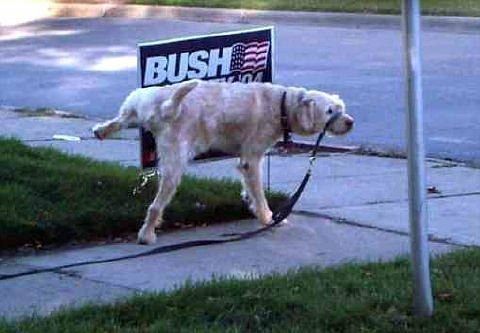
"We can't tolerate a new terrorist state in the heart of the Middle East, with large oil reserves that could be used to fund its radical ambitions, or used to inflict economic damage on the West," Bush said in a news conference last week in the Rose Garden.
Finally, President Bush has 'fessed up to the real reason we are in Iraq: oil.
It's a shame that it took 2,700 young american lives, 20,000 wounded and hundreds of thousand of civilian casualties to get to the basic proposition: we want to control Iraqi's oil.
Friday, October 06, 2006
Thursday, October 05, 2006
Only Way to the Truth---Torture Hastert
http://www.huffingtonpost.com/tom-dantoni
Only Way to the Truth---Torture Hastert
Tom D'Antoni
Is there anything worse, in the minds of most Americans than being a sexual predator to underage kids? Why it's right up there with rape and murder. Finding out who in Congress knew about Foley, when did they know it, and why didn't they do anything about it is as important to the nation as finding out who was behind 9/11.
Are our children worth less?
There's only one way to get this information. Send Foley, Hastert, Boehner, and the rest of them to Guantanamo and torture the information out of them.
I mean, that's this administration's policy, isn't it? Why restrict it to Muslims? Why not just expand it to all involved in anti-social activities, especially one as serious as this.
That we'd have to build a double-wide waterboard for Hastert is beside the point.
Habeas Corpus? Pfaff! If President Bush can waive it for Muslims, he can waive it for those who prey on our children, right?
It's the policy of the administration that Bush has the power to choose whom to torture. It's only logical thing to do, and the only way to get the truth out of these Republican Congressional leaders.
Living by the sword makes for tough payback.
Only Way to the Truth---Torture Hastert
Tom D'Antoni
Is there anything worse, in the minds of most Americans than being a sexual predator to underage kids? Why it's right up there with rape and murder. Finding out who in Congress knew about Foley, when did they know it, and why didn't they do anything about it is as important to the nation as finding out who was behind 9/11.
Are our children worth less?
There's only one way to get this information. Send Foley, Hastert, Boehner, and the rest of them to Guantanamo and torture the information out of them.
I mean, that's this administration's policy, isn't it? Why restrict it to Muslims? Why not just expand it to all involved in anti-social activities, especially one as serious as this.
That we'd have to build a double-wide waterboard for Hastert is beside the point.
Habeas Corpus? Pfaff! If President Bush can waive it for Muslims, he can waive it for those who prey on our children, right?
It's the policy of the administration that Bush has the power to choose whom to torture. It's only logical thing to do, and the only way to get the truth out of these Republican Congressional leaders.
Living by the sword makes for tough payback.
Wednesday, October 04, 2006
GOP'S REVEALING RESPONSE TO FOLEY SCANDAL
From Scootmandubious' blog at
http://scootmandubious.blogspot.com/2006/10/gops-revealing-response-to-foley.html
GOP's Revealing Response To Foley Scandal
Notice the political cartoon by Mike Shelton in the Orange County Register. I point it out, because it is one of the many variations of a GOP theme to take no responsibility for the Rep. Mike Foley scandal.
I have assembled the responses of various GOP spokespeople, politicians and talking heads, because the next time this pious party clothes itself in the myth of superior moral values we will be able to remind them of their hypocrisy.
THE 'IT'S NOTHING' ARGUMENT
Tony Snow (White House Press Secretary):
"Look, I hate to tell you, but it's not always pretty up there on Capitol Hill and there have been other scandals as you know that have been more than simply naughty e-mails."
Michael Savage (Right-Wing Talk Show Host):
"I think it's a very dangerous trend. Not only the obsession with child molestation, which is an obsession, by the way, with the American media right now because they don't have the guts to take on radical Islam so they make a big deal out of child molestation. It's like a new hysteria. It's the new witch hunt. Going after child molesters today is the equivalent of witch hunts in Pilgrim times. Everyone is suspected of being a witch or a child molester because -- well, many different reasons."
THE 'IT'S THE DEM'S FAULT' STRATEGY
Rush Limbaugh (Right-Wing Talk Show Host):
"This constantly being on defense and waiting for the next shoe to drop, it is time for the Republicans to fight back and point out, and it should led by Hastert, point out how the Democrats continue to avoid the real issues of importance that we as a nation face.
"Nancy Pelosi knows the person who planted the story about Foley five weeks before the election. But, Rush, but, Rush, but, Rush, tell us what you know, how can you be sure she knows? Well, I can almost guarantee it. She might not know who specifically did it, but she knows where it comes from, all the liberal Democrats do. She knows the person because these e-mails were held by a liberal, they were planted by a liberal, and they were timed to the 2006 election cycle by a liberal, and liberals know liberals, and so Pelosi knows who Deep IM is. There's a Deep IM here, not Deep Throat, but there's a Deep IM."
Dennis Hastert (Speaker of the House):
(Continuing the unproven charge that Democrats leaked the sexually explicit messages) "We have a story to tell, and the Democrats have — in my view have — put this thing forward to try to block us from telling the story. They're trying to put us on defense."
THE CLINTON GAMBIT
Brit Hume (Fox News Anchor):
"It is very serious misbehavior on the part of Congressman Foley, whether it stems from arrogance or just weakness of the human flesh is another question. It’s probably worth noting that there’s a difference between the two parties on these issues. Inappropriate behavior towards subordinates didn’t cost Gerry Studds his Democratic seat in Massachussetts, nor Barney Frank his. Nor did inappropriate behavior toward a subordinate even cost Bill Clinton his standing within the Democratic Party, even though indirectly he was impeached for it. Mark Foley found out about this, was found out to have done this, and he’s out of office and in total disgrace in his party."
BLAME THE VICTIM
Matt Drudge (Right-Wing Blogger & Talk Show Host):
"And if anything, these kids are less innocent — these 16 and 17 year-old beasts…and I've seen what they're doing on YouTube and I've seen what they're doing all over the internet — oh yeah — you just have to tune into any part of their pop culture. You're not going to tell me these are innocent babies. Have you read the transcripts that ABC posted going into the weekend of these instant messages, back and forth? The kids are egging the Congressman on! The kids are trying to get this out of him. We haven't got the whole story on this."
SUMMARY
There you have it. According to the GOP, Rep. Mark Foley, who was allowed to continue as co-chair of the Missing and Exploited Children's caucus despite his party knowing of his behavior months, if not years, before this revelation, is not the true problem. And his party has a myriad of ways of denying responsibility.
They invoke Clinton, who never had sex with a minor, as if his behavior was morally equivalent. They blame the Dems for the fact that the truth got out, as if it should have stayed hidden until after the election. They have suggested that child molestation is a non-issue. And they have had the audacity to blame the victims.
If the GOP holds onto the House and/or Senate now, either the American people are truly blind, deaf and dumb, or Diebold will have done a heckuva job.
http://scootmandubious.blogspot.com/2006/10/gops-revealing-response-to-foley.html
GOP's Revealing Response To Foley Scandal
Notice the political cartoon by Mike Shelton in the Orange County Register. I point it out, because it is one of the many variations of a GOP theme to take no responsibility for the Rep. Mike Foley scandal.
I have assembled the responses of various GOP spokespeople, politicians and talking heads, because the next time this pious party clothes itself in the myth of superior moral values we will be able to remind them of their hypocrisy.
THE 'IT'S NOTHING' ARGUMENT
Tony Snow (White House Press Secretary):
"Look, I hate to tell you, but it's not always pretty up there on Capitol Hill and there have been other scandals as you know that have been more than simply naughty e-mails."
Michael Savage (Right-Wing Talk Show Host):
"I think it's a very dangerous trend. Not only the obsession with child molestation, which is an obsession, by the way, with the American media right now because they don't have the guts to take on radical Islam so they make a big deal out of child molestation. It's like a new hysteria. It's the new witch hunt. Going after child molesters today is the equivalent of witch hunts in Pilgrim times. Everyone is suspected of being a witch or a child molester because -- well, many different reasons."
THE 'IT'S THE DEM'S FAULT' STRATEGY
Rush Limbaugh (Right-Wing Talk Show Host):
"This constantly being on defense and waiting for the next shoe to drop, it is time for the Republicans to fight back and point out, and it should led by Hastert, point out how the Democrats continue to avoid the real issues of importance that we as a nation face.
"Nancy Pelosi knows the person who planted the story about Foley five weeks before the election. But, Rush, but, Rush, but, Rush, tell us what you know, how can you be sure she knows? Well, I can almost guarantee it. She might not know who specifically did it, but she knows where it comes from, all the liberal Democrats do. She knows the person because these e-mails were held by a liberal, they were planted by a liberal, and they were timed to the 2006 election cycle by a liberal, and liberals know liberals, and so Pelosi knows who Deep IM is. There's a Deep IM here, not Deep Throat, but there's a Deep IM."
Dennis Hastert (Speaker of the House):
(Continuing the unproven charge that Democrats leaked the sexually explicit messages) "We have a story to tell, and the Democrats have — in my view have — put this thing forward to try to block us from telling the story. They're trying to put us on defense."
THE CLINTON GAMBIT
Brit Hume (Fox News Anchor):
"It is very serious misbehavior on the part of Congressman Foley, whether it stems from arrogance or just weakness of the human flesh is another question. It’s probably worth noting that there’s a difference between the two parties on these issues. Inappropriate behavior towards subordinates didn’t cost Gerry Studds his Democratic seat in Massachussetts, nor Barney Frank his. Nor did inappropriate behavior toward a subordinate even cost Bill Clinton his standing within the Democratic Party, even though indirectly he was impeached for it. Mark Foley found out about this, was found out to have done this, and he’s out of office and in total disgrace in his party."
BLAME THE VICTIM
Matt Drudge (Right-Wing Blogger & Talk Show Host):
"And if anything, these kids are less innocent — these 16 and 17 year-old beasts…and I've seen what they're doing on YouTube and I've seen what they're doing all over the internet — oh yeah — you just have to tune into any part of their pop culture. You're not going to tell me these are innocent babies. Have you read the transcripts that ABC posted going into the weekend of these instant messages, back and forth? The kids are egging the Congressman on! The kids are trying to get this out of him. We haven't got the whole story on this."
SUMMARY
There you have it. According to the GOP, Rep. Mark Foley, who was allowed to continue as co-chair of the Missing and Exploited Children's caucus despite his party knowing of his behavior months, if not years, before this revelation, is not the true problem. And his party has a myriad of ways of denying responsibility.
They invoke Clinton, who never had sex with a minor, as if his behavior was morally equivalent. They blame the Dems for the fact that the truth got out, as if it should have stayed hidden until after the election. They have suggested that child molestation is a non-issue. And they have had the audacity to blame the victims.
If the GOP holds onto the House and/or Senate now, either the American people are truly blind, deaf and dumb, or Diebold will have done a heckuva job.
Monday, October 02, 2006
Chavez drives a hard bargain, but Big Oil's options are limited
Chavez drives a hard bargain, but Big Oil's options are limited
- Robert Collier, Chronicle Staff Writer
Sunday, September 24, 2006
(09-24) 04:00 PDT El Tigre, Venezuela -- On the hot, shrub-covered plains around this dusty, dingy town, an odd courtship is being carried out between the world's most prominent revolutionary and the world's biggest oil companies.
Just as there is no love between President Hugo Chavez and the Bush administration, there is little love lost between Chavez and the foreign oilmen who are pumping up the huge reservoirs of underground oil. But they need each other. The United States needs Venezuela to help quench its bottomless thirst for oil, and Chavez needs America to buy it from him in order to fund his dreams of spreading his leftist ideology around the hemisphere.
The stakes here are huge. The area around El Tigre, known as the Orinoco Oil Belt, possesses the world's biggest petroleum reserves -- 1.3 trillion barrels of so-called extra-heavy oil. Chevron, Exxon Mobil, ConocoPhillips and dozens of other foreign firms are here, using recently developed technologies to extract the tarlike, sulfurous crude and refine it.
"Everyone agrees that the Orinoco Belt has the biggest reserves in the world," said Alberto Quiros, a Chavez critic and former president of Royal Dutch Shell's Venezuela operations. "What Chavez will do with them is another question, but there's no doubt that Venezuela will take Saudi Arabia's place as No. 1."
Chavez already is forcing Chevron, which is based in San Ramon, and other oil companies to swallow some bitter pills.
In the past two years, he has raised foreign oil companies' corporate income tax to 50 percent from 30 percent and increased royalties payable to the government from as low as 1 percent to 33 percent. After he threatened to confiscate their operations elsewhere in Venezuela, 26 foreign oil companies, including Chevron, agreed earlier this year to convert their operations into joint ventures with the state-owned Petroleos de Venezuela (known as Pdvsa), with the government holding the majority share. Two European firms -- Total of France and ENI of Italy -- refused, and Chavez promptly expelled them.
Now, the government is demanding similar concessions at the four Orinoco Belt operations, in which Chevron, Exxon Mobil and others have invested about $17 billion. The government is demanding that Pdvsa's ownership share of the projects be increased from an average of 40 percent to at least 51 percent and that Pdvsa take over operational control of the oilfields.
Negotiations over these demands are coming to a head, and the outcome may influence whether Venezuela's rising tensions with Washington subside or even escalate. Analysts say foreign companies may seek international arbitration to block Chavez's takeover attempt.
"It will be quite a fight," said Gersan Zurita, an oil-industry analyst with credit evaluator Fitch Ratings in New York, which advises investors who have purchased $3.9 billion in bonds for the Orinoco Belt projects. In June, Fitch Ratings downgraded the projects' credit scores, saying Chavez's demands could damage the projects' viability.
But for Chavez, it's a matter of national pride -- and political bragging points. Around the country, the government has put up posters and billboards showing Chavez extending his arms in a victory salute, accompanied by the slogan, "Full oil sovereignty: Joint ventures -- more benefits for the people!"
As top-secret negotiations begin, all sides in the conflict have tried to keep a low profile. Chevron, Exxon and ConocoPhillips declined Chronicle requests to interview their officials and to visit their installations in Venezuela.
Zurita said the companies fear being blacklisted by Chavez and losing out on future oil deals.
"It's a very delicate situation. It involves more than just these contracts. Any comment by any of these companies could be used by the government to demand more concessions," Zurita said. "The biggest incentive (for the companies) is to preserve access for the future. These are enormous reserves."
Luis Giusti, president of Pdvsa from 1994 to 1999, noted that many companies have little choice but to look to Venezuela because their reserves elsewhere are dwindling and their access to the Middle East is limited by the firm grip of those nations' government monopolies.
"The foreign companies will accept his conditions because they have so much capital sunk there, and they can't afford a confrontation with the government," said Giusti, who during his time at Pdvsa championed many of the privatization policies that Chavez is now reversing.
For its part, the government seems to have adopted a bunker mentality. Pdvsa's Caracas headquarters declined a Chronicle request to interview its officials or to visit its facilities. One official said that all visits were suspended "for security reasons" after a July 17 fire damaged the country's largest oil refinery, at Amuay in the northwest -- a sign that the government is nervous about the company's high rate of accidents, which it blames partially on sabotage by U.S.-inspired domestic opposition groups.
The only government official willing to talk about the subject was Fadi Kabboul, the oil attache at Venezuela's embassy in Washington.
"For the market, the Orinoco extra-heavy oil operations are very profitable, and they will continue being very profitable. There will be ever-greater interest and participation by foreign companies," Kabboul said.
The Orinoco conflict carries echoes of the knock-down, drag-out battle for control that erupted in December 2002, after Chavez ordered Pdvsa to directly fund and operate major social-welfare projects in poor communities. The company's executives, engineers, technicians and ship captains accused Chavez of "politicizing" Pdvsa, went on strike and shut down almost all operations for three months.
The strikers had hoped to topple Chavez by reviving a military-civilian coup effort that overthrew Chavez for two days in April 2002. But Chavez defeated the strike and fired 18,000 of the strikers -- about 90 percent of Pdvsa's white-collar workforce. The company is still struggling to recover, and most energy analysts believe that Pdvsa's production is only one-half of its pre-strike level. Nevertheless, Chavez's oil revenue has been buoyed by the increase of production by foreign companies, which has risen from 400,000 barrels per day to 620,000 per day, and the more-than-doubling of international oil prices.
In El Tigre, dozens of fired Pdvsa employees gather every day at 3 p.m. in a neighborhood park to exchange job tips and speculate hopefully about Chavez's downfall.
"This could be the issue that finally forces the Bush administration to take a stronger stand against Chavez," said Antonio Cardona, a former director of Pdvsa's crude pumping operations for the region. "Foreign companies have been afraid of Chavez, and they're staying just so they don't lose all they have invested, but he may have finally overplayed his hand now."
Cardona said he worked for Pdvsa for 20 years until he joined the strike. Three and a half years later, like his fellow strikers, Cardona is blacklisted throughout the oil industry by Pdvsa, which prohibits even private companies from hiring any ex-striker. Cardona must scrabble for work, doing small engineering jobs for private-sector construction projects.
At the same time, Chavez has begun shifting oil exports away from the United States, where Venezuelan crude is the fifth-largest foreign source of petroleum. During the first half of 2006, Venezuelan oil exports to the United States dropped by approximately 6 percent from the year before to about 1.3 million barrels per day, according to U.S. Energy Department figures.
At the same time, Chavez has struck oil deals with Beijing, including $5 billion of Chinese investments in Venezuelan energy projects by 2012. Venezuela's exports to China, while still relatively small at 150,000 barrels per day, are projected to reach 500,000 barrels by 2010.
Chevron may wind up playing an unwilling role in Chavez's most audacious plan -- construction of a 5,700-mile natural-gas pipeline through South America. The proposed $25 billion project, the central element of Chavez's plan to unify the continent's economies, would start in the eastern Venezuelan city of Puerto Ordaz, slice through Brazil's Amazon jungle and end in Argentina, with trunk lines to Peru, Bolivia and Chile.
Chevron is already a major player in helping Venezuela exploit its offshore natural gas deposits in the Caribbean and Atlantic, which at 151 trillion square feet are the eighth-largest proven reserves in the world. Recently, Venezuelan officials have suggested that despite prior understandings that Chevron would be allowed to convert the production from its Deltana field in the Atlantic into liquefied natural gas and export it to the United States, this supply will instead be sent south via the new pipeline -- whether Chevron likes it or not.
Some experts scoff at Chavez's pipeline idea. "It's a very large and very costly project," said Giusti. "It will never be built to transport reserves of gas that don't exist to markets that don't exist."
Other analysts call it far-thinking. A recent study by the Latin American Energy Organization, a regional alliance headquartered in Quito, Ecuador, concluded that Chavez's pipelines could save the area's governments $100 billion over the next 20 years by lowering imports of liquid natural gas from Asia and Africa.
One smaller project is already under construction -- a 140-mile gas pipeline linking Venezuela to Colombia, with an extension planned to Panama.
In El Tigre, a sprawling small city of 150,000 in Anzoategui state, there is little evidence of the nearby oil bonanza. Main streets are nondescript, and the highways leading out into the surrounding savanna are narrow and potholed.
But billboards are everywhere touting Chavez and the state's governor, Tarek William Saab.
"With Tarek and Chavez, Anzoategui is progressing!" blare the signs, showing a triumphant Chavez leading a slightly sheepish governor, both wearing revolutionary-red shirts and surrounded by cheering crowds.
But even many Chavez supporters complain that the president's grand ambitions have not benefited the people of Anzoategui.
"Because of oil we have everything, yet we have nothing," said El Tigre Mayor Ernesto Paraqueima, a member of Chavez's ruling coalition.
Speaking in his simple office in El Tigre's concrete-block municipal building as a broken sprinkler downstairs coated the windows with water, he bitterly criticized what he said was the waste of huge sums of money.
"The bureaucracy is enormous, and corruption is gigantic," Paraqueima said. "Anzoategui is a rich state, with rich land. You can look on either side of any highway in Anzoategui, and you won't see anything being cultivated anywhere. That's because of oil. We prefer to bring rice and potatoes from Colombia than growing it here. We produce almost nothing but oil.
"Every foreign oil company in the world is here, but where is the benefit?"
________________________________________
Chavez's oil money
In the past three years, as international oil prices have soared, Chavez has eliminated his political opposition's influence over government finances and drawn a tight curtain of secrecy around them.
In 2003, after the opposition led a chaotic strike by executives and technicians at the state-owned, yet formerly autonomous, oil company Petroleos de Venezuela, or Pdvsa, Chavez fired 18,000 of the white-collar strikers. In 2005, Chavez gained full control of the formerly independent Central Bank, and opposition parties' boycott of legislative elections gave his coalition all 167 seats in Congress that December.
Even Citgo, the U.S. refiner and gas retailer wholly owned by Pdvsa, earlier this year paid off all its debt and stopped the routine practice of reporting data to Moody's financial service -- thus ending all outside scrutiny of the company's books.
What's more, much of Venezuela's oil revenue now stays outside the government's budgetary channels. In recent years, Congress has set each year's government budget by setting Pdvsa's tax payments artificially low. This year, for example, Pdvsa's taxes are pegged to a price of $26 per barrel for Venezuela's blend of heavy crudes -- which currently sells for $58. The $32 per barrel difference remains largely off-budget, with no legislative supervision or disclosure of line-item details.
Documents released by the government earlier this month showed oil revenues of $49 billion for Pdvsa in the first six months of 2006, a 21 percent increase from the same period last year.
In Caracas, Pdvsa declined to make officials available to The Chronicle for an interview.
-- Robert Collier
E-mail Robert Collier at rcollier@sfchronicle.com.
- Robert Collier, Chronicle Staff Writer
Sunday, September 24, 2006
(09-24) 04:00 PDT El Tigre, Venezuela -- On the hot, shrub-covered plains around this dusty, dingy town, an odd courtship is being carried out between the world's most prominent revolutionary and the world's biggest oil companies.
Just as there is no love between President Hugo Chavez and the Bush administration, there is little love lost between Chavez and the foreign oilmen who are pumping up the huge reservoirs of underground oil. But they need each other. The United States needs Venezuela to help quench its bottomless thirst for oil, and Chavez needs America to buy it from him in order to fund his dreams of spreading his leftist ideology around the hemisphere.
The stakes here are huge. The area around El Tigre, known as the Orinoco Oil Belt, possesses the world's biggest petroleum reserves -- 1.3 trillion barrels of so-called extra-heavy oil. Chevron, Exxon Mobil, ConocoPhillips and dozens of other foreign firms are here, using recently developed technologies to extract the tarlike, sulfurous crude and refine it.
"Everyone agrees that the Orinoco Belt has the biggest reserves in the world," said Alberto Quiros, a Chavez critic and former president of Royal Dutch Shell's Venezuela operations. "What Chavez will do with them is another question, but there's no doubt that Venezuela will take Saudi Arabia's place as No. 1."
Chavez already is forcing Chevron, which is based in San Ramon, and other oil companies to swallow some bitter pills.
In the past two years, he has raised foreign oil companies' corporate income tax to 50 percent from 30 percent and increased royalties payable to the government from as low as 1 percent to 33 percent. After he threatened to confiscate their operations elsewhere in Venezuela, 26 foreign oil companies, including Chevron, agreed earlier this year to convert their operations into joint ventures with the state-owned Petroleos de Venezuela (known as Pdvsa), with the government holding the majority share. Two European firms -- Total of France and ENI of Italy -- refused, and Chavez promptly expelled them.
Now, the government is demanding similar concessions at the four Orinoco Belt operations, in which Chevron, Exxon Mobil and others have invested about $17 billion. The government is demanding that Pdvsa's ownership share of the projects be increased from an average of 40 percent to at least 51 percent and that Pdvsa take over operational control of the oilfields.
Negotiations over these demands are coming to a head, and the outcome may influence whether Venezuela's rising tensions with Washington subside or even escalate. Analysts say foreign companies may seek international arbitration to block Chavez's takeover attempt.
"It will be quite a fight," said Gersan Zurita, an oil-industry analyst with credit evaluator Fitch Ratings in New York, which advises investors who have purchased $3.9 billion in bonds for the Orinoco Belt projects. In June, Fitch Ratings downgraded the projects' credit scores, saying Chavez's demands could damage the projects' viability.
But for Chavez, it's a matter of national pride -- and political bragging points. Around the country, the government has put up posters and billboards showing Chavez extending his arms in a victory salute, accompanied by the slogan, "Full oil sovereignty: Joint ventures -- more benefits for the people!"
As top-secret negotiations begin, all sides in the conflict have tried to keep a low profile. Chevron, Exxon and ConocoPhillips declined Chronicle requests to interview their officials and to visit their installations in Venezuela.
Zurita said the companies fear being blacklisted by Chavez and losing out on future oil deals.
"It's a very delicate situation. It involves more than just these contracts. Any comment by any of these companies could be used by the government to demand more concessions," Zurita said. "The biggest incentive (for the companies) is to preserve access for the future. These are enormous reserves."
Luis Giusti, president of Pdvsa from 1994 to 1999, noted that many companies have little choice but to look to Venezuela because their reserves elsewhere are dwindling and their access to the Middle East is limited by the firm grip of those nations' government monopolies.
"The foreign companies will accept his conditions because they have so much capital sunk there, and they can't afford a confrontation with the government," said Giusti, who during his time at Pdvsa championed many of the privatization policies that Chavez is now reversing.
For its part, the government seems to have adopted a bunker mentality. Pdvsa's Caracas headquarters declined a Chronicle request to interview its officials or to visit its facilities. One official said that all visits were suspended "for security reasons" after a July 17 fire damaged the country's largest oil refinery, at Amuay in the northwest -- a sign that the government is nervous about the company's high rate of accidents, which it blames partially on sabotage by U.S.-inspired domestic opposition groups.
The only government official willing to talk about the subject was Fadi Kabboul, the oil attache at Venezuela's embassy in Washington.
"For the market, the Orinoco extra-heavy oil operations are very profitable, and they will continue being very profitable. There will be ever-greater interest and participation by foreign companies," Kabboul said.
The Orinoco conflict carries echoes of the knock-down, drag-out battle for control that erupted in December 2002, after Chavez ordered Pdvsa to directly fund and operate major social-welfare projects in poor communities. The company's executives, engineers, technicians and ship captains accused Chavez of "politicizing" Pdvsa, went on strike and shut down almost all operations for three months.
The strikers had hoped to topple Chavez by reviving a military-civilian coup effort that overthrew Chavez for two days in April 2002. But Chavez defeated the strike and fired 18,000 of the strikers -- about 90 percent of Pdvsa's white-collar workforce. The company is still struggling to recover, and most energy analysts believe that Pdvsa's production is only one-half of its pre-strike level. Nevertheless, Chavez's oil revenue has been buoyed by the increase of production by foreign companies, which has risen from 400,000 barrels per day to 620,000 per day, and the more-than-doubling of international oil prices.
In El Tigre, dozens of fired Pdvsa employees gather every day at 3 p.m. in a neighborhood park to exchange job tips and speculate hopefully about Chavez's downfall.
"This could be the issue that finally forces the Bush administration to take a stronger stand against Chavez," said Antonio Cardona, a former director of Pdvsa's crude pumping operations for the region. "Foreign companies have been afraid of Chavez, and they're staying just so they don't lose all they have invested, but he may have finally overplayed his hand now."
Cardona said he worked for Pdvsa for 20 years until he joined the strike. Three and a half years later, like his fellow strikers, Cardona is blacklisted throughout the oil industry by Pdvsa, which prohibits even private companies from hiring any ex-striker. Cardona must scrabble for work, doing small engineering jobs for private-sector construction projects.
At the same time, Chavez has begun shifting oil exports away from the United States, where Venezuelan crude is the fifth-largest foreign source of petroleum. During the first half of 2006, Venezuelan oil exports to the United States dropped by approximately 6 percent from the year before to about 1.3 million barrels per day, according to U.S. Energy Department figures.
At the same time, Chavez has struck oil deals with Beijing, including $5 billion of Chinese investments in Venezuelan energy projects by 2012. Venezuela's exports to China, while still relatively small at 150,000 barrels per day, are projected to reach 500,000 barrels by 2010.
Chevron may wind up playing an unwilling role in Chavez's most audacious plan -- construction of a 5,700-mile natural-gas pipeline through South America. The proposed $25 billion project, the central element of Chavez's plan to unify the continent's economies, would start in the eastern Venezuelan city of Puerto Ordaz, slice through Brazil's Amazon jungle and end in Argentina, with trunk lines to Peru, Bolivia and Chile.
Chevron is already a major player in helping Venezuela exploit its offshore natural gas deposits in the Caribbean and Atlantic, which at 151 trillion square feet are the eighth-largest proven reserves in the world. Recently, Venezuelan officials have suggested that despite prior understandings that Chevron would be allowed to convert the production from its Deltana field in the Atlantic into liquefied natural gas and export it to the United States, this supply will instead be sent south via the new pipeline -- whether Chevron likes it or not.
Some experts scoff at Chavez's pipeline idea. "It's a very large and very costly project," said Giusti. "It will never be built to transport reserves of gas that don't exist to markets that don't exist."
Other analysts call it far-thinking. A recent study by the Latin American Energy Organization, a regional alliance headquartered in Quito, Ecuador, concluded that Chavez's pipelines could save the area's governments $100 billion over the next 20 years by lowering imports of liquid natural gas from Asia and Africa.
One smaller project is already under construction -- a 140-mile gas pipeline linking Venezuela to Colombia, with an extension planned to Panama.
In El Tigre, a sprawling small city of 150,000 in Anzoategui state, there is little evidence of the nearby oil bonanza. Main streets are nondescript, and the highways leading out into the surrounding savanna are narrow and potholed.
But billboards are everywhere touting Chavez and the state's governor, Tarek William Saab.
"With Tarek and Chavez, Anzoategui is progressing!" blare the signs, showing a triumphant Chavez leading a slightly sheepish governor, both wearing revolutionary-red shirts and surrounded by cheering crowds.
But even many Chavez supporters complain that the president's grand ambitions have not benefited the people of Anzoategui.
"Because of oil we have everything, yet we have nothing," said El Tigre Mayor Ernesto Paraqueima, a member of Chavez's ruling coalition.
Speaking in his simple office in El Tigre's concrete-block municipal building as a broken sprinkler downstairs coated the windows with water, he bitterly criticized what he said was the waste of huge sums of money.
"The bureaucracy is enormous, and corruption is gigantic," Paraqueima said. "Anzoategui is a rich state, with rich land. You can look on either side of any highway in Anzoategui, and you won't see anything being cultivated anywhere. That's because of oil. We prefer to bring rice and potatoes from Colombia than growing it here. We produce almost nothing but oil.
"Every foreign oil company in the world is here, but where is the benefit?"
________________________________________
Chavez's oil money
In the past three years, as international oil prices have soared, Chavez has eliminated his political opposition's influence over government finances and drawn a tight curtain of secrecy around them.
In 2003, after the opposition led a chaotic strike by executives and technicians at the state-owned, yet formerly autonomous, oil company Petroleos de Venezuela, or Pdvsa, Chavez fired 18,000 of the white-collar strikers. In 2005, Chavez gained full control of the formerly independent Central Bank, and opposition parties' boycott of legislative elections gave his coalition all 167 seats in Congress that December.
Even Citgo, the U.S. refiner and gas retailer wholly owned by Pdvsa, earlier this year paid off all its debt and stopped the routine practice of reporting data to Moody's financial service -- thus ending all outside scrutiny of the company's books.
What's more, much of Venezuela's oil revenue now stays outside the government's budgetary channels. In recent years, Congress has set each year's government budget by setting Pdvsa's tax payments artificially low. This year, for example, Pdvsa's taxes are pegged to a price of $26 per barrel for Venezuela's blend of heavy crudes -- which currently sells for $58. The $32 per barrel difference remains largely off-budget, with no legislative supervision or disclosure of line-item details.
Documents released by the government earlier this month showed oil revenues of $49 billion for Pdvsa in the first six months of 2006, a 21 percent increase from the same period last year.
In Caracas, Pdvsa declined to make officials available to The Chronicle for an interview.
-- Robert Collier
E-mail Robert Collier at rcollier@sfchronicle.com.
Subscribe to:
Posts (Atom)